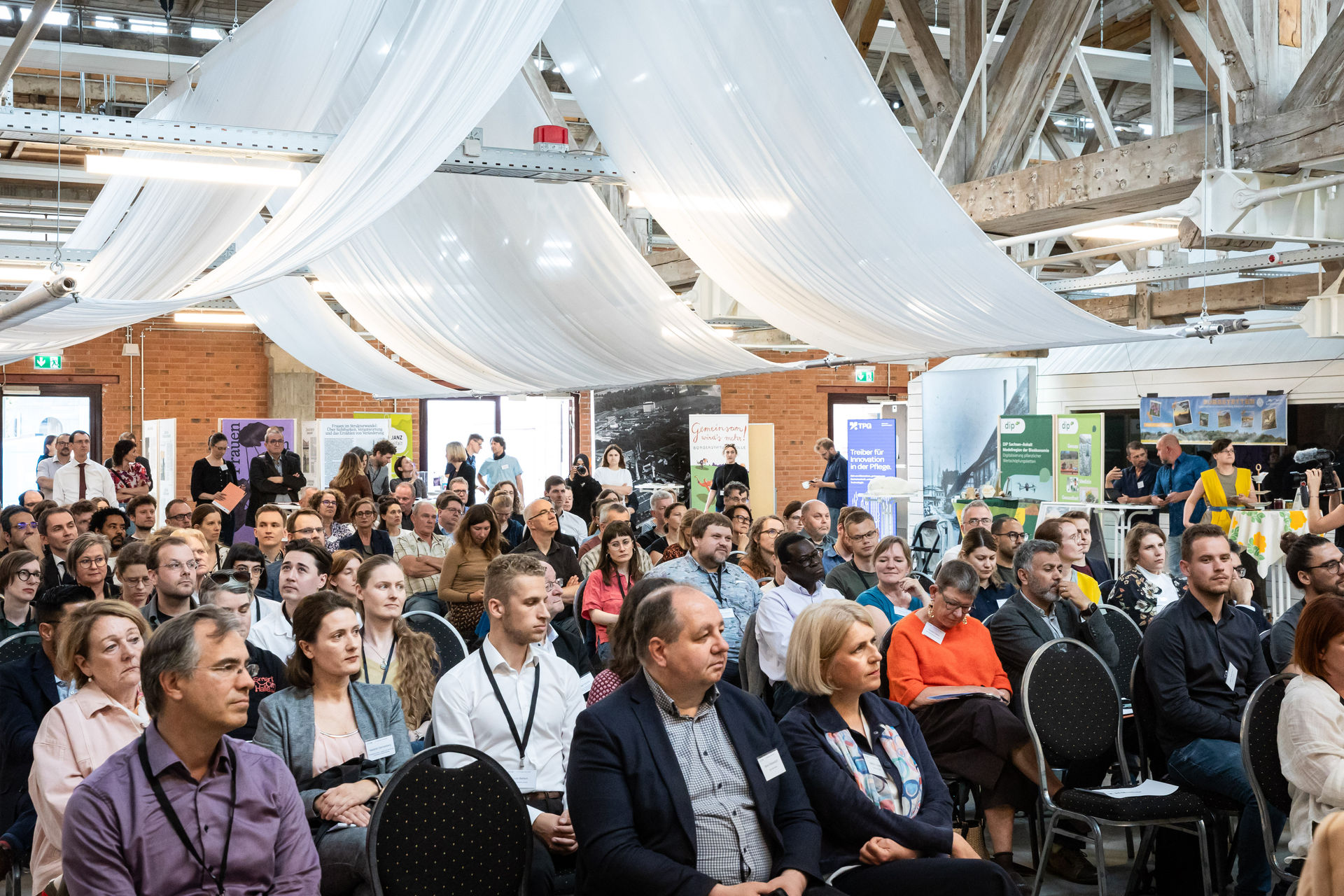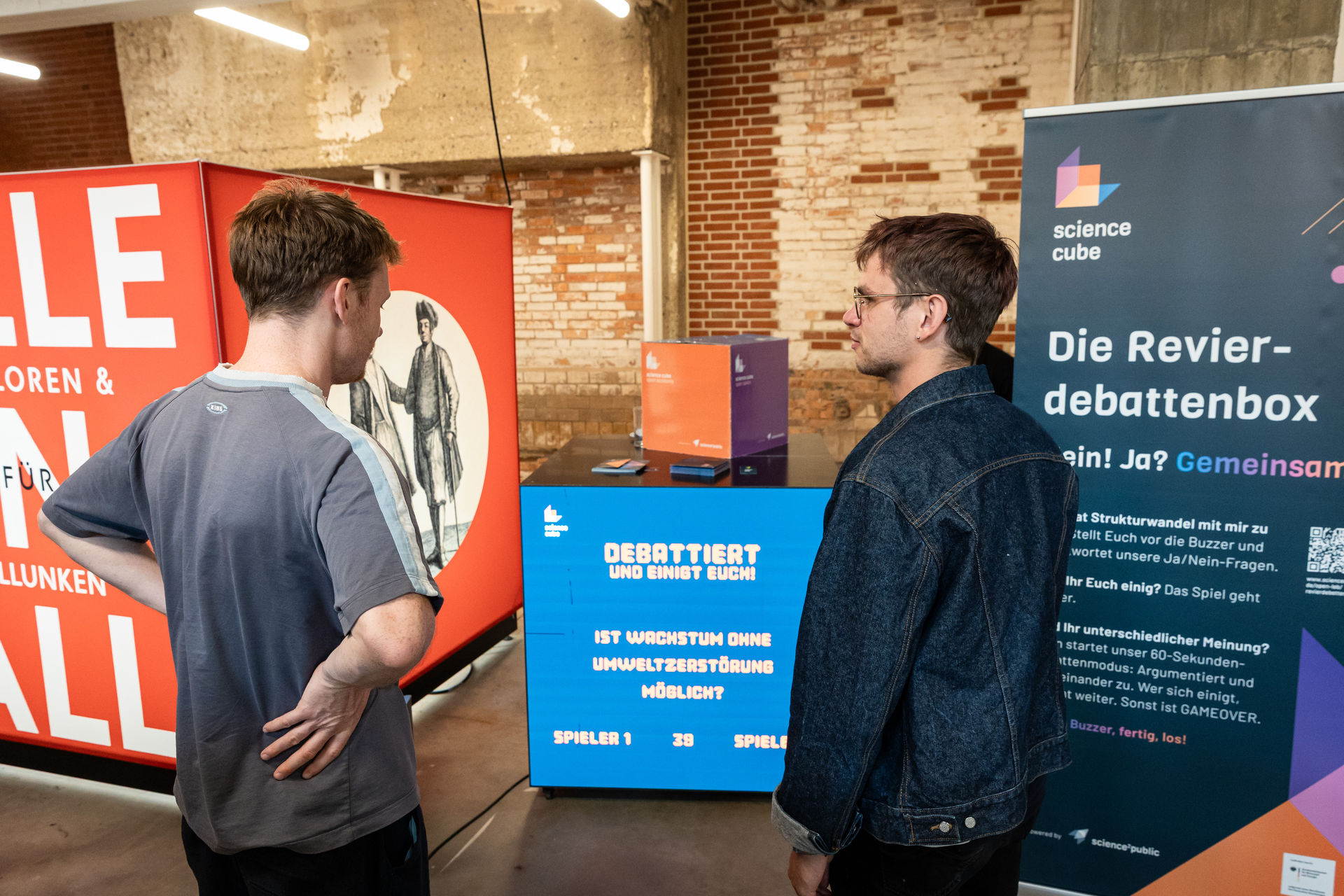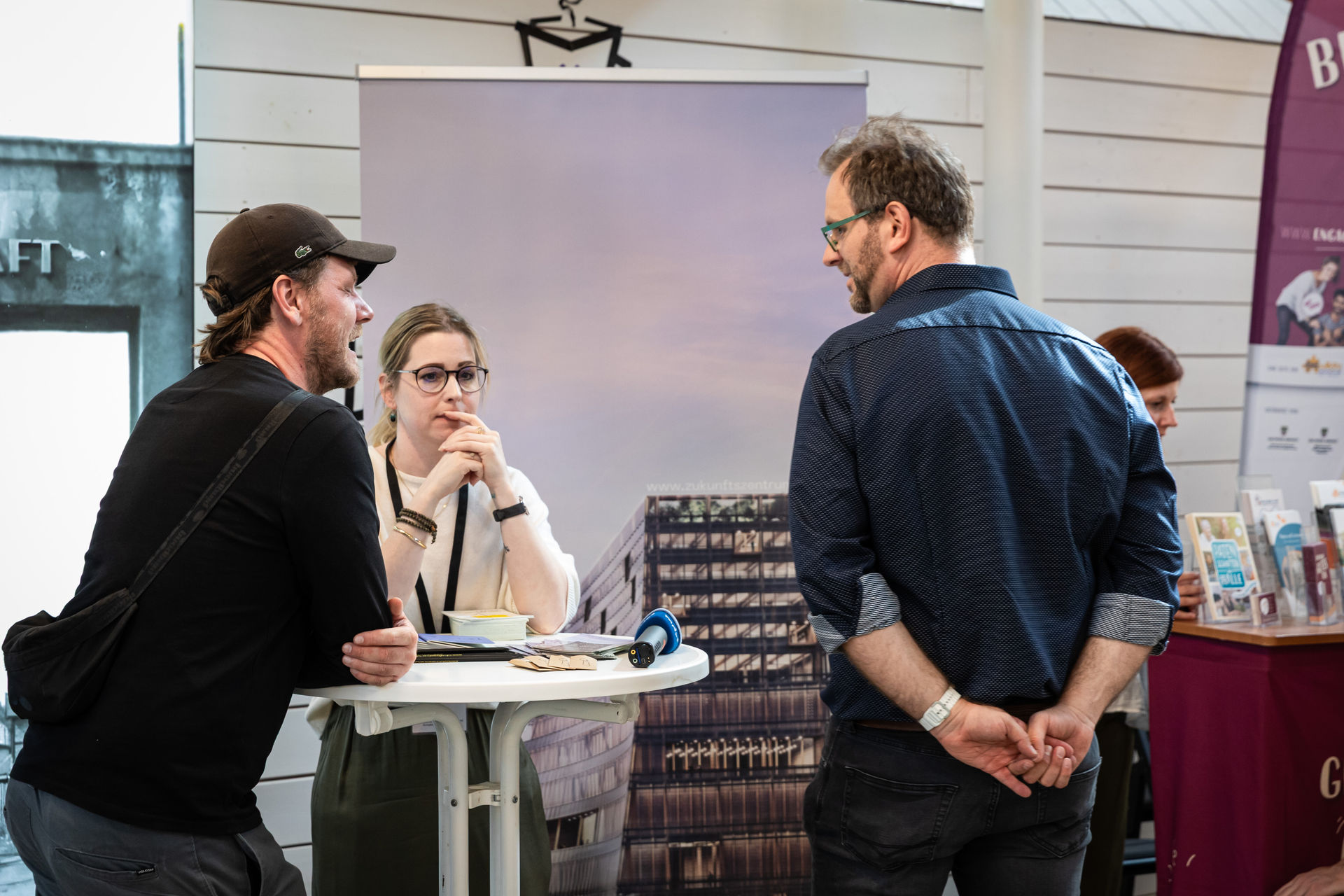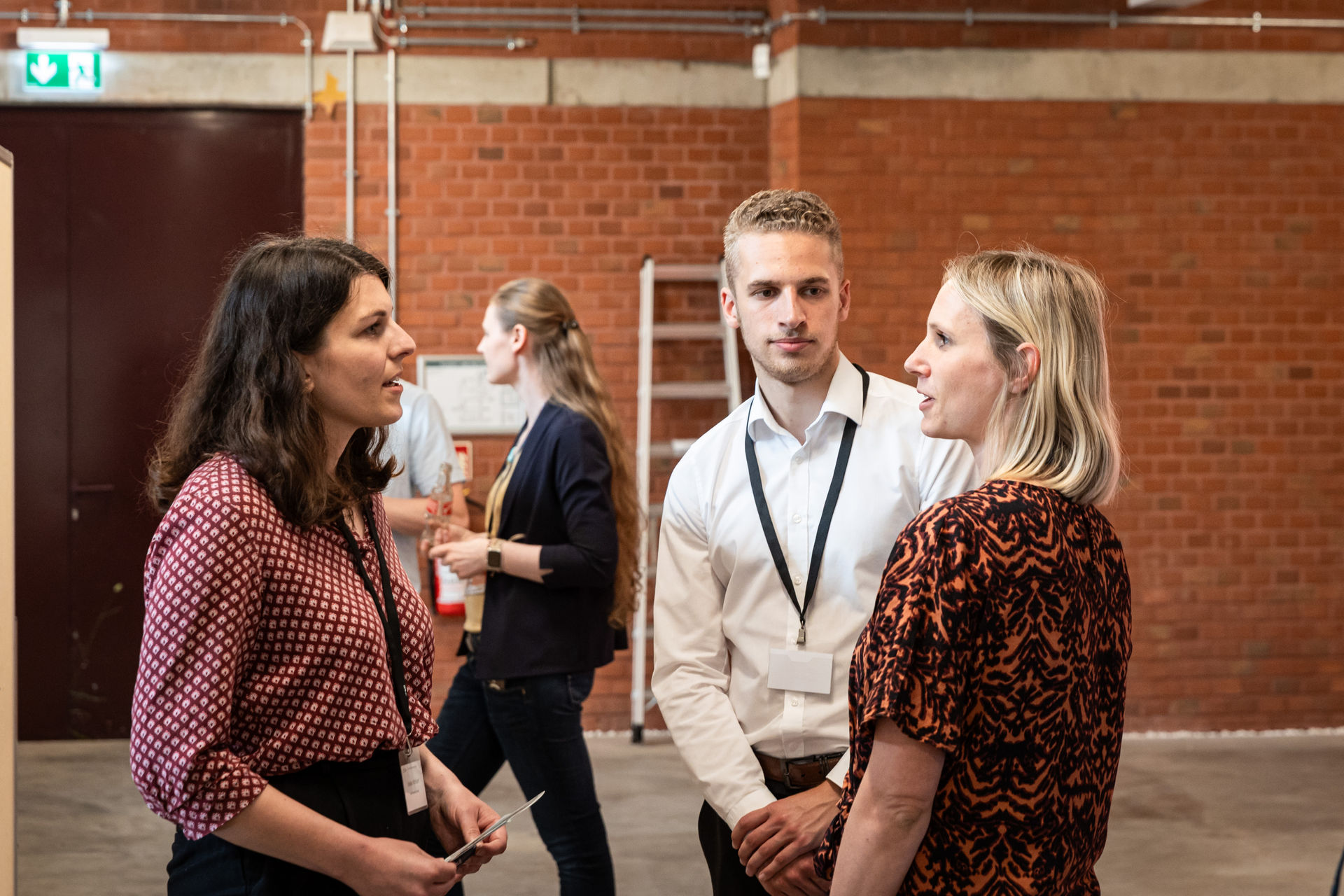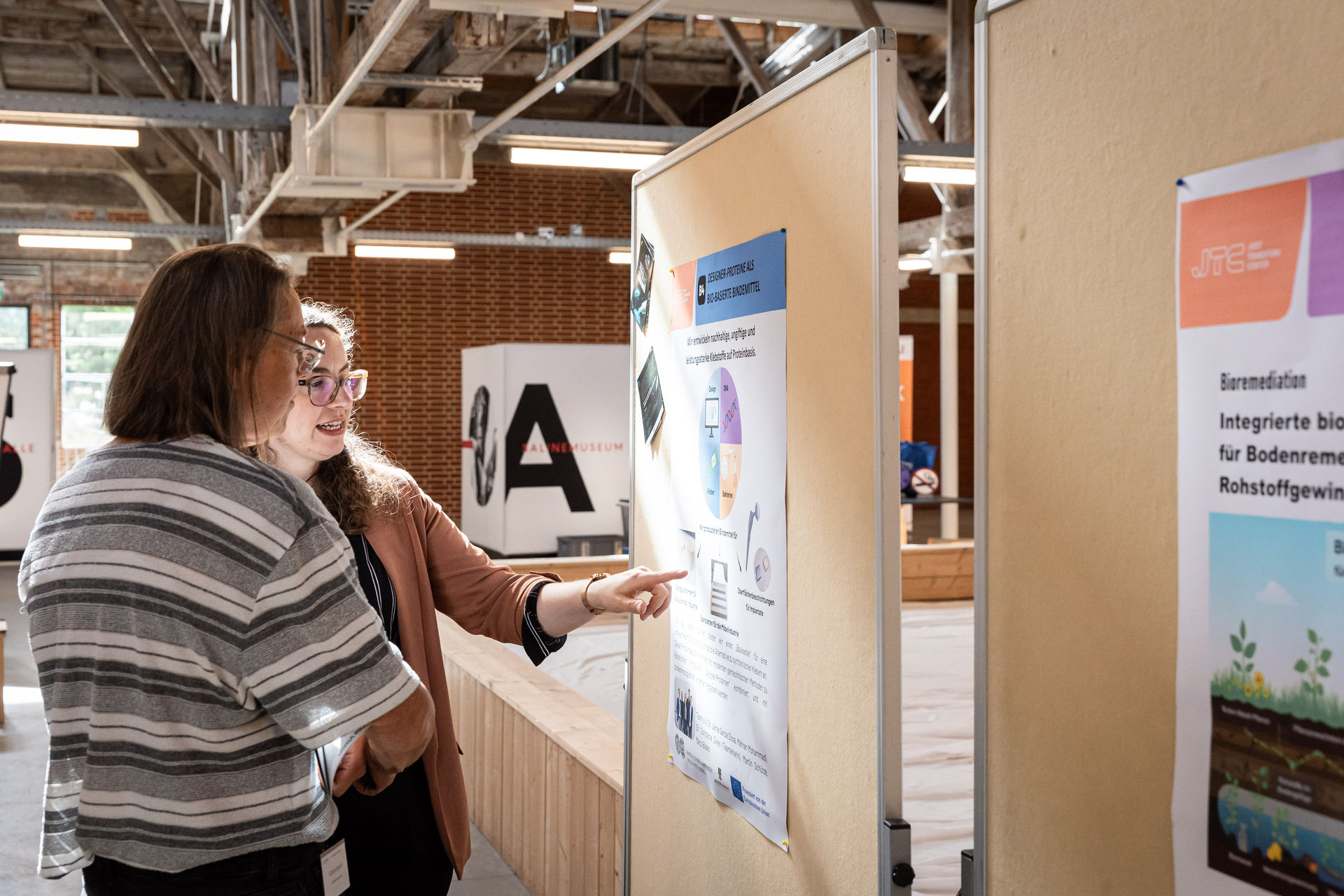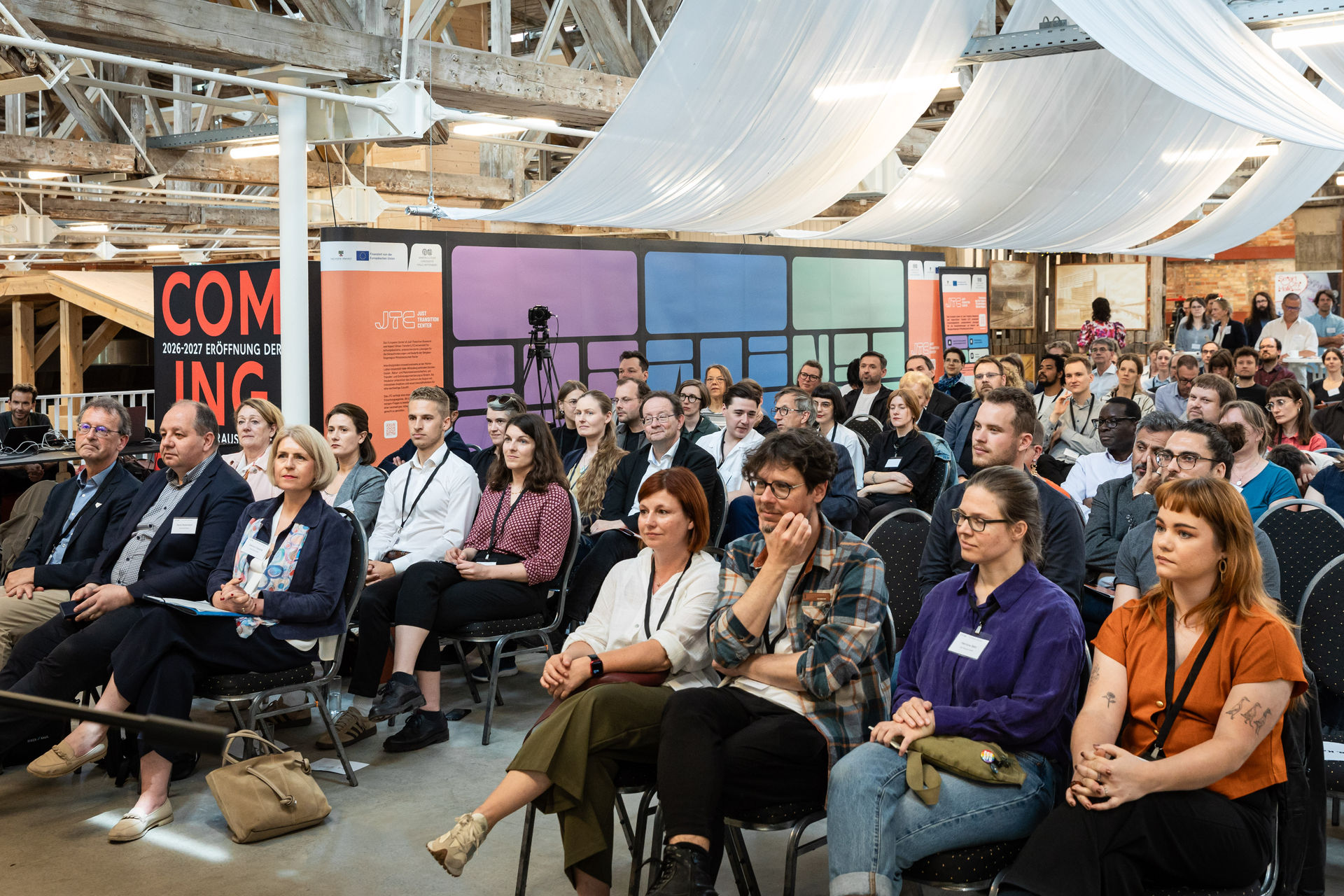
With 170 guests and a ‘Market of Opportunities’ where 17 civil society organisations and associations from the city presented themselves, the third edition of ‘JTC meets the Region’ – this time focusing on Halle (Saale) – was a great success.
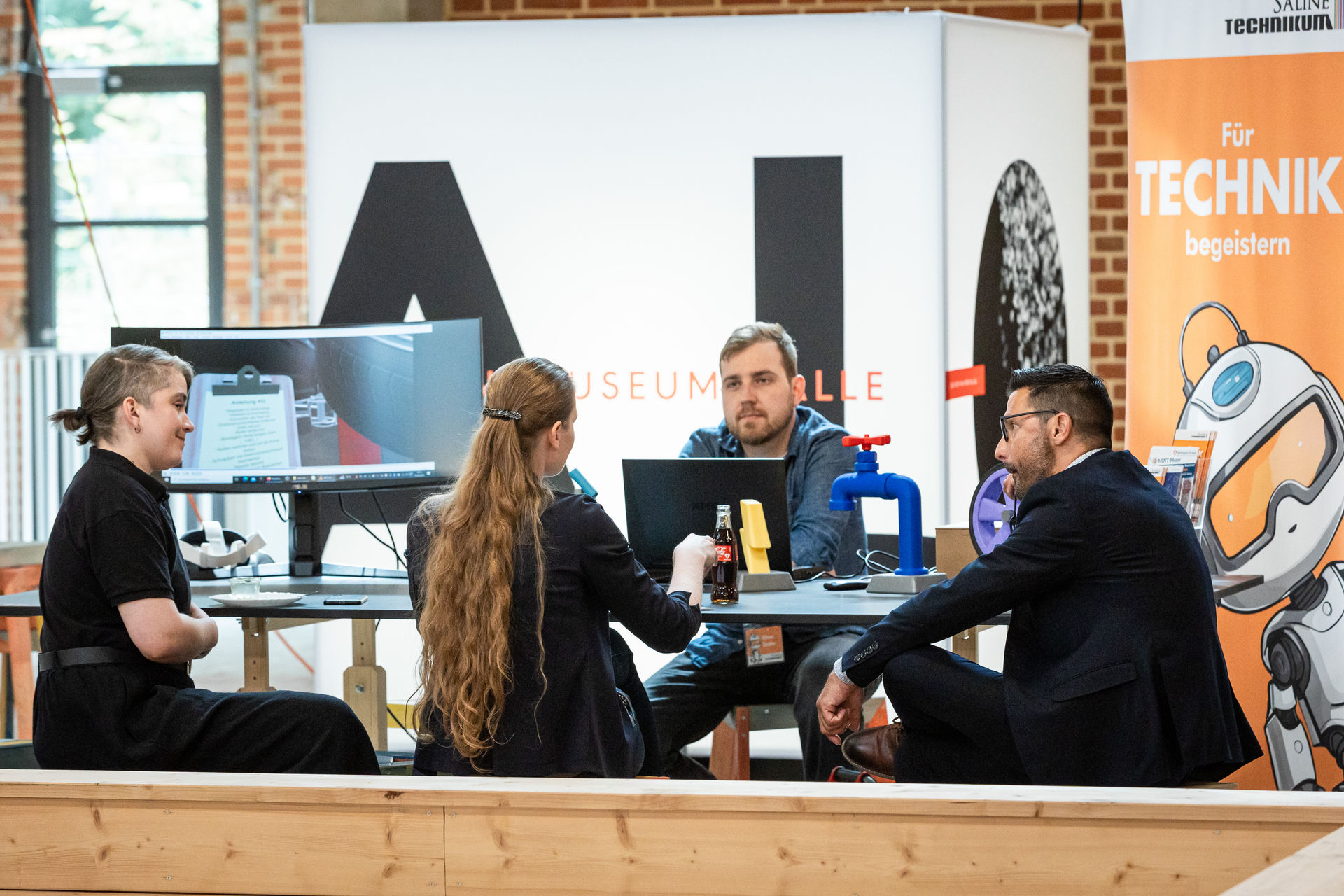
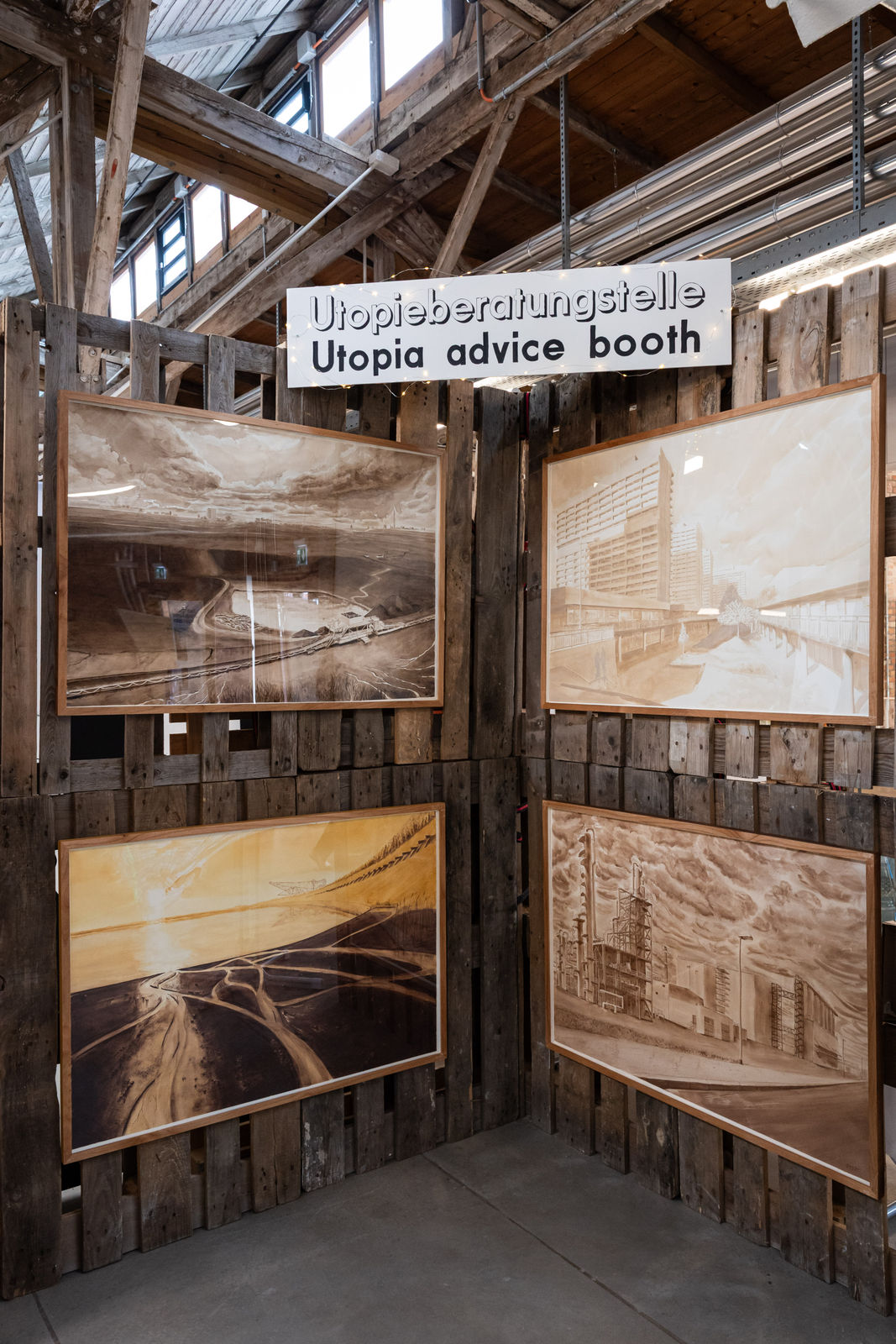
The general format – a stage programme followed by a networking session – remained largely unchanged, but the content showcased the full diversity of the JTC’s projects. This time, the event was complemented by a marketplace where, alongside the 17 innovation teams from the Just Transition Centre, 17 partners from Halle’s diverse landscape of associations and organisations also presented themselves. This once again particularly emphasised the networking nature of the event series and expanded our stage from a platform solely for presenting JTC projects to a showcase for other stakeholders involved in structural change.
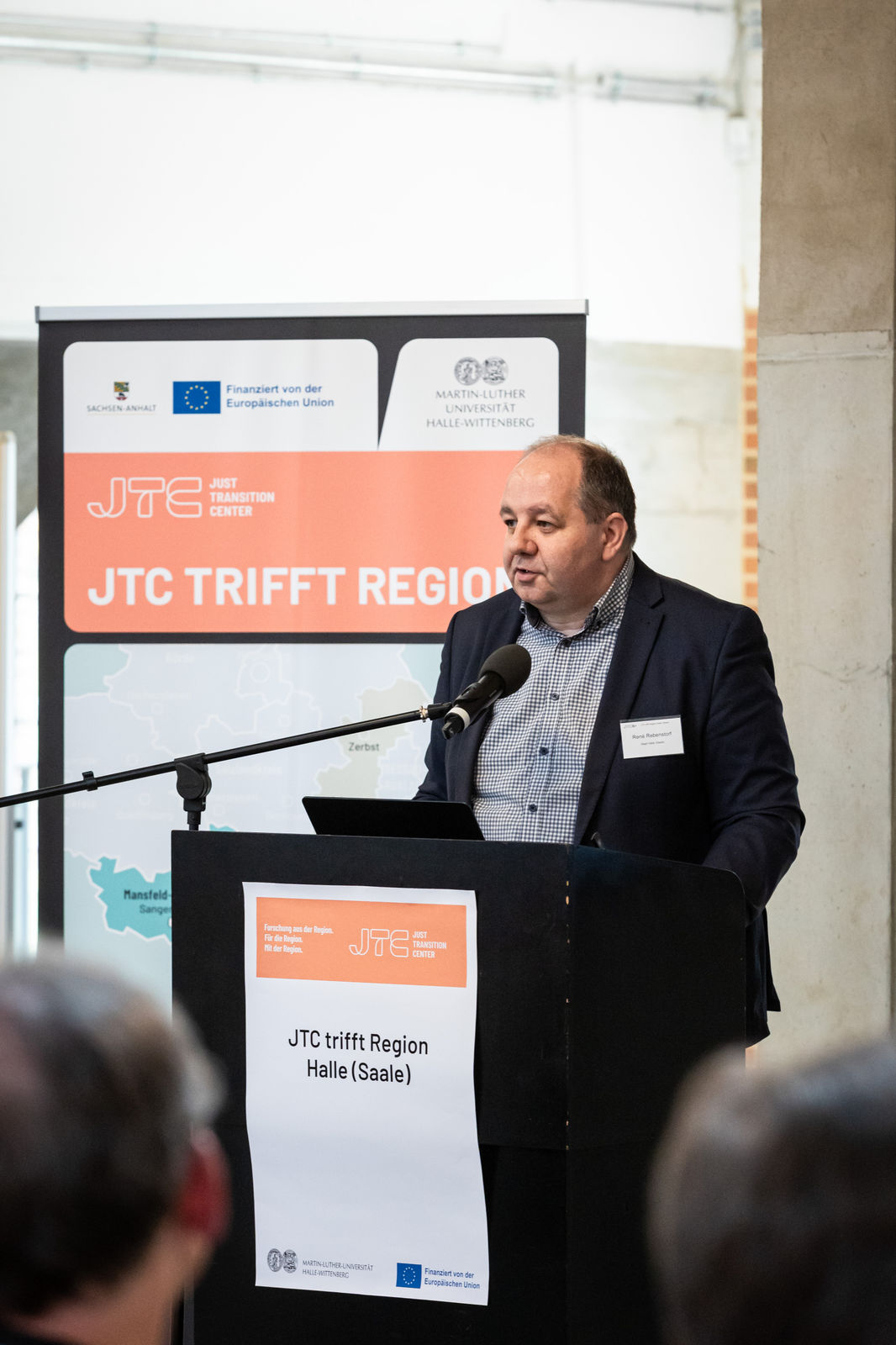
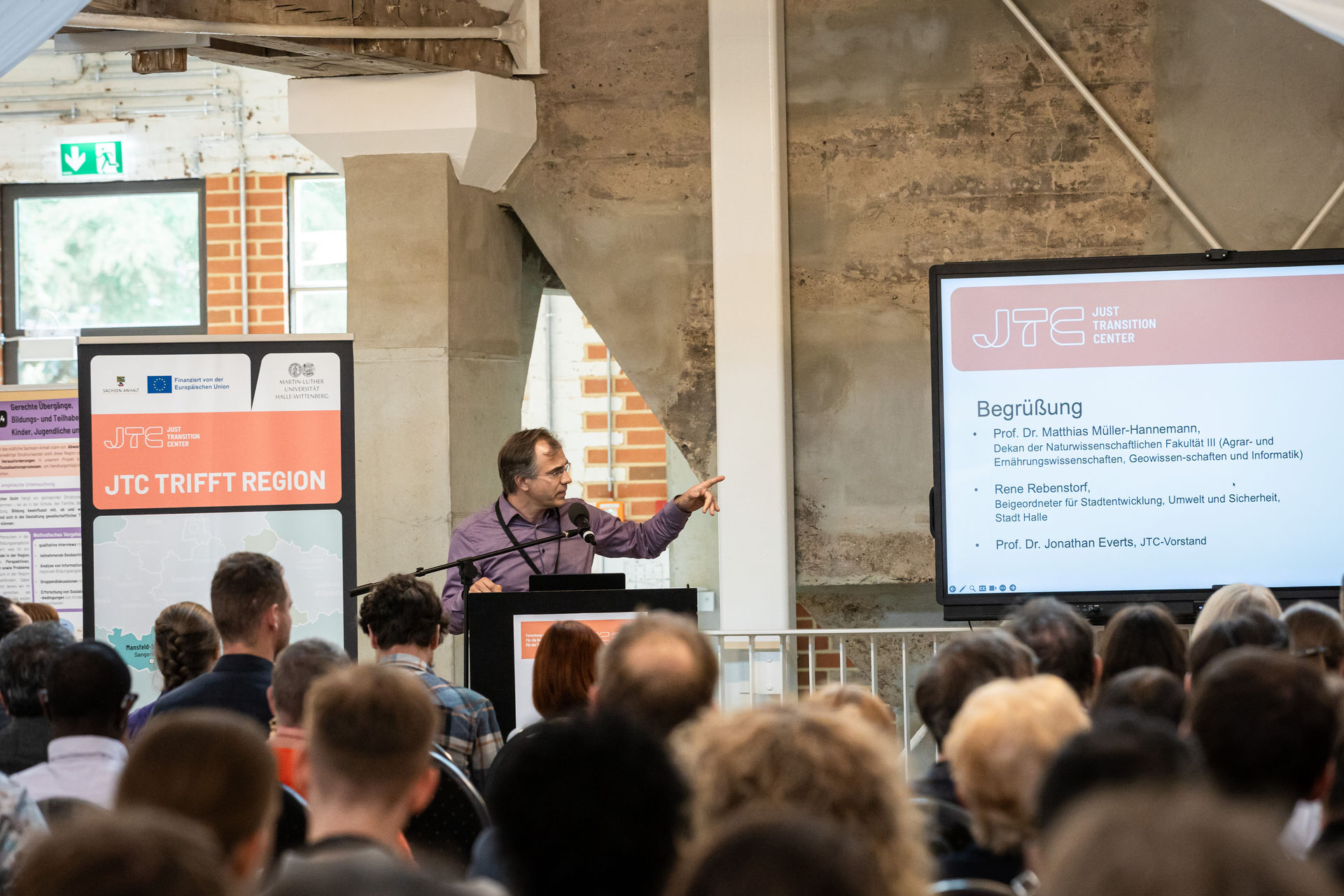
The guests were welcomed by the Dean of the Faculty of Natural Sciences III at MLU, Prof. Matthias Müller-Hannemann, and by René Rebenstorf, Halle’s Deputy Mayor for Urban Development, Environment and Safety, before JTC Board Member Prof. Jonathan Everts concluded by addressing the audience with some general introductory remarks on the origins and focus of the JTC project.
Prof. Müller-Hannemann represented the Vice-Chancellor of Martin Luther University and emphasised that MLU sees itself as a driving force behind transformation in Saxony-Anhalt. In this context, the JTC project plays an important role, and this network meeting is a “signal that the university is championing change” and is therefore engaging in dialogue with the local community, business and politics.
René Rebenstorf illustrated this transformation with a number of practical examples and highlighted the achievements Saxony-Anhalt has already made: securing the supply of renewable energy through a high density of wind turbines, and the transformation of opencast mines into local recreational areas featuring lakes. He compared the state with Baden-Württemberg and emphasised:
“In Halle, 55 per cent of homes are already connected to the district heating network. In Stuttgart, the figure is just ten per cent, and expanding the district heating network there will cost a further 12 billion euros – as much as the expansion of the Stuttgart 21 long-distance railway station.” He believes the positive achievements of structural change need to be emphasised more strongly, and his key message is “what others will still have to endure in order to reach the level we have already achieved”.
Dr Sabine Odparlik, Head of the Department of Economy, Science and Digitalisation for the City of Halle, then highlighted in her keynote speech the achievements Halle has already made in the field of digital transformation and the challenges that still need to be overcome.
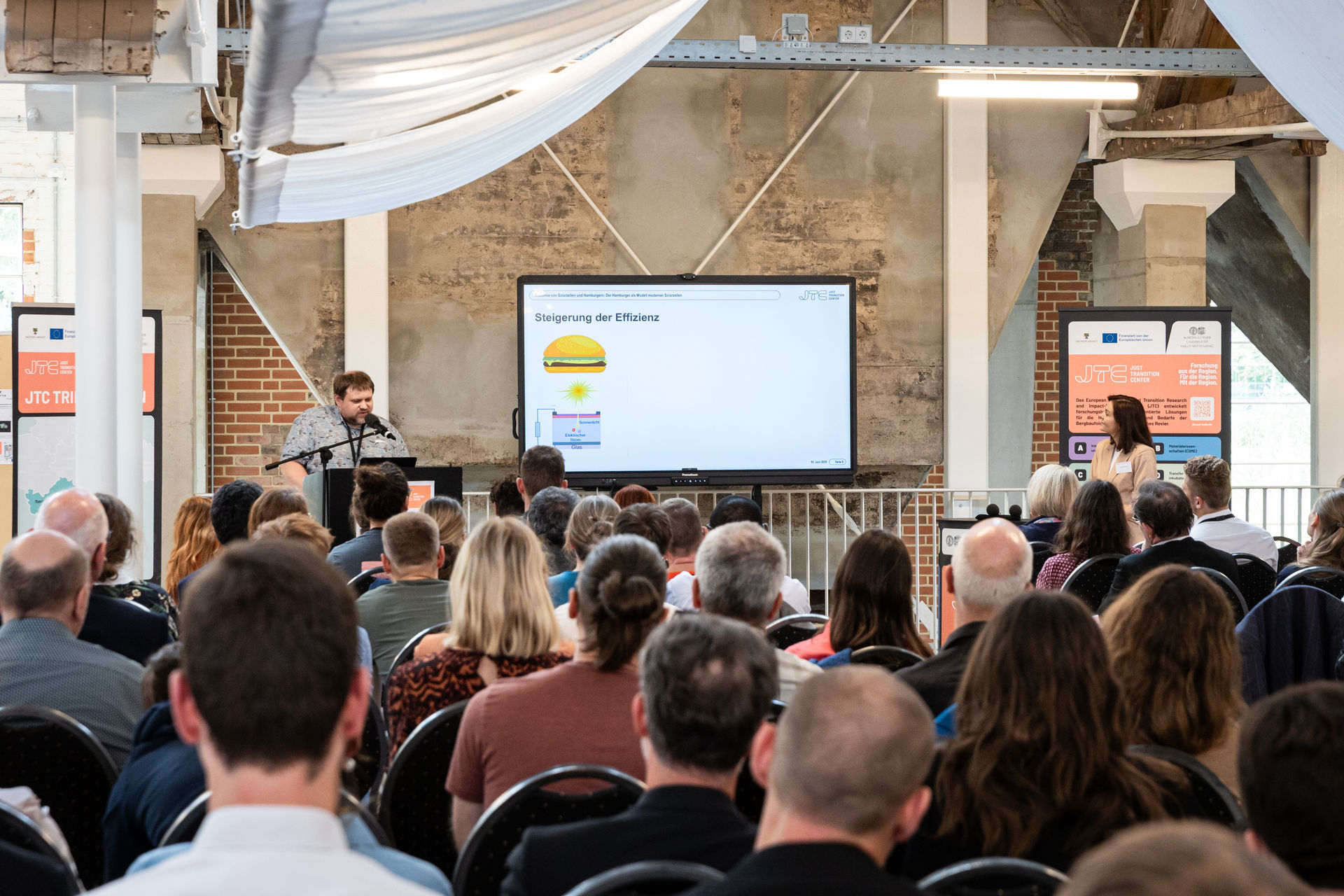
Afterwards, four JTC teams presented their projects. Dr Torsten Hölscher immediately provided a moment of amusement when he compared the solar cells the team has been working with to a tasty burger. Both are made up of layers that deliver varying amounts of energy. The image stuck with the audience, and one or two of them will surely think of solar energy the next time they visit a burger restaurant.
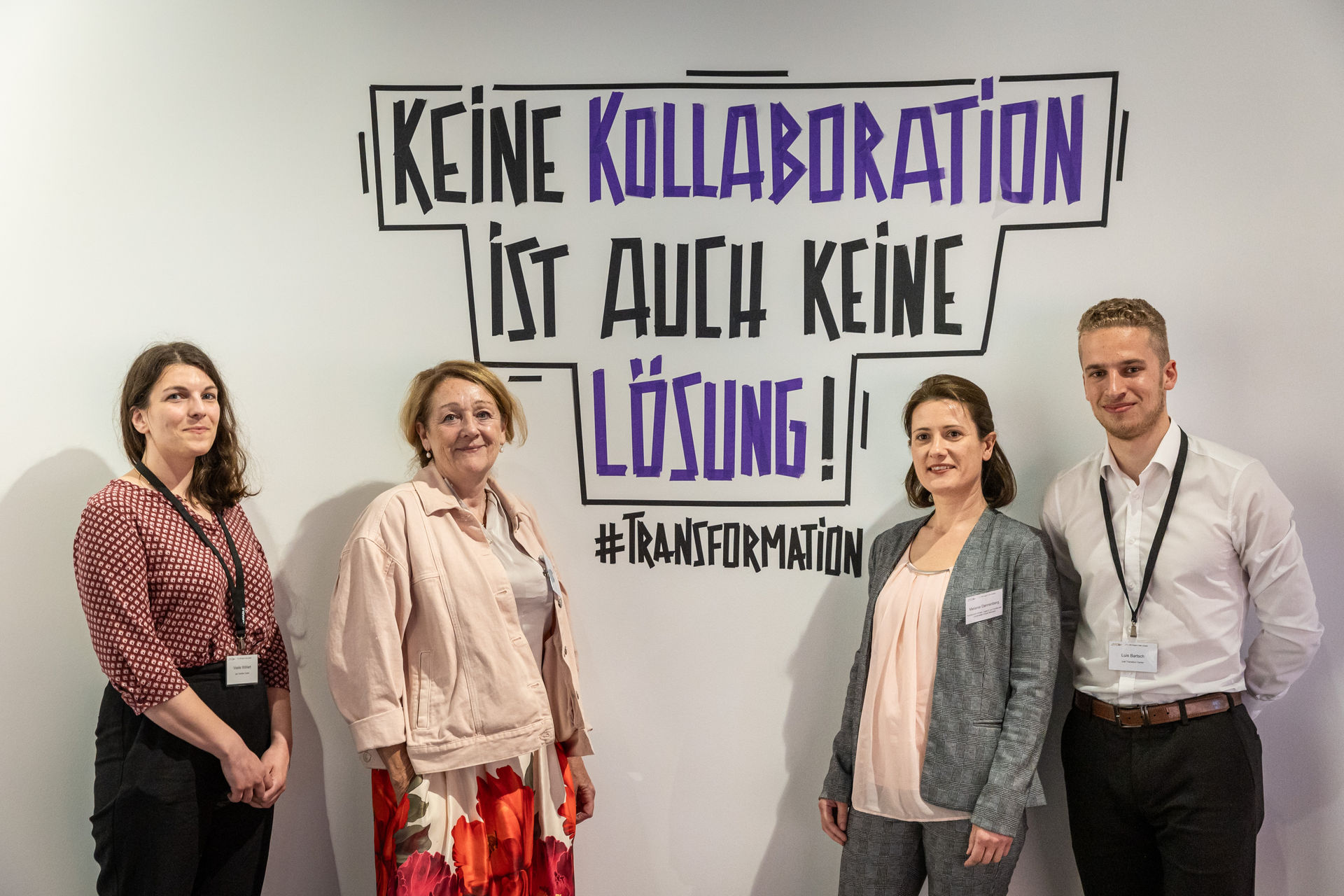
The other projects presented brought their regional partners from Halle straight onto the stage and were interviewed together about their work. Benjamin Kashlan has only recently begun collaborating with the City of Halle’s Smart City project to work jointly on open-source solutions for digital public administration. Team C2 is also taking a digital approach; together with representatives from the courts and the youth welfare office, they presented the child support calculator as a solution for digital family law administration. The developer, Viselle Wöhlert, explained how she originally came up with the idea and presented it to the researchers at the JTC. The calculator is now being tested in practice and further developed based on the feedback received.
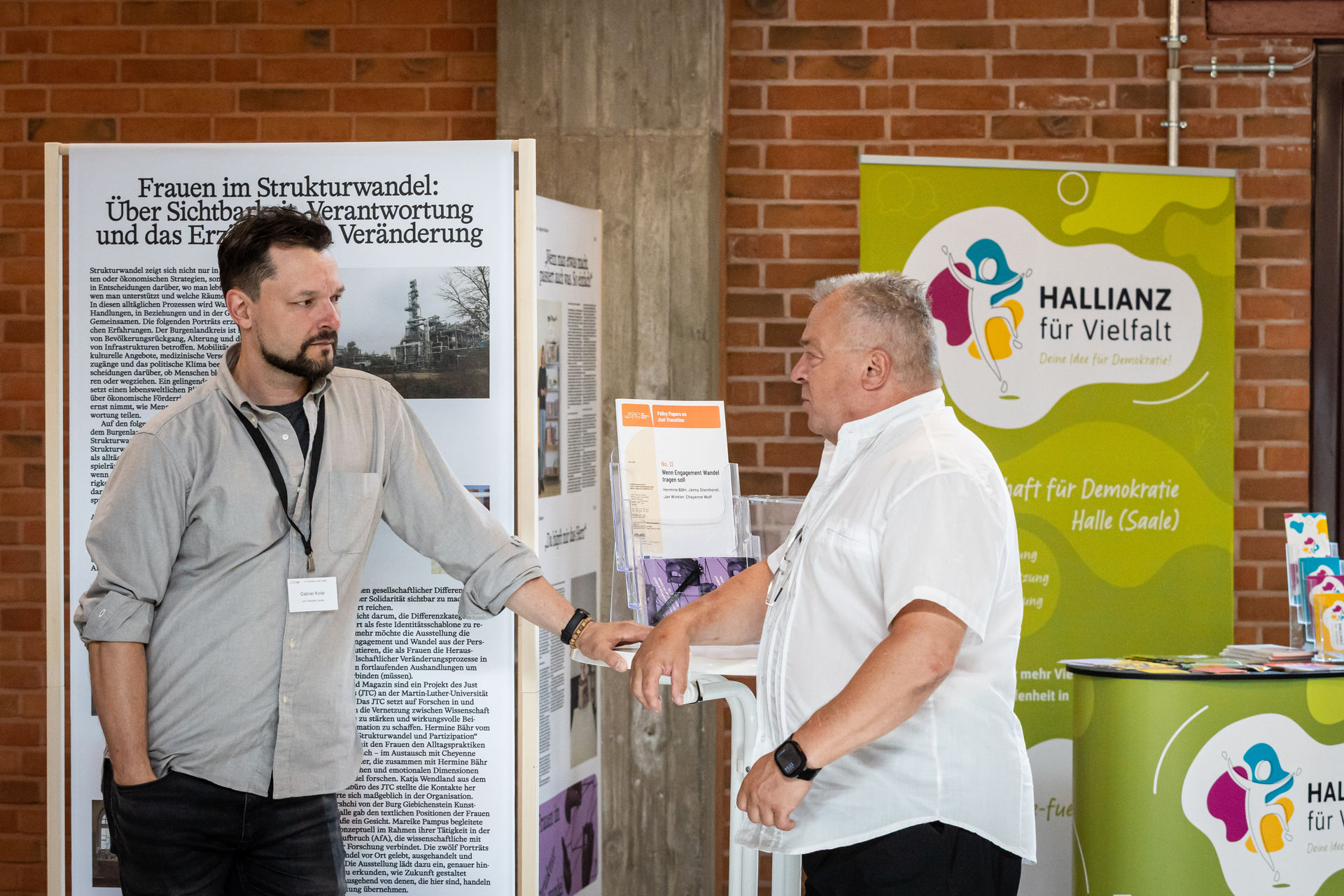
Some members of the audience were particularly moved by the project presentation from the ‘Structural Change & Participation’ team. They not only presented the successful exhibition ‘Women in Structural Change’, but also a new initiative with the Halle Volunteer Agency, which aims to alleviate loneliness and fears of loss. The team focuses on the social practices that people develop to cope with change; whether this involves making use of vacant properties or social engagement – which, as Hermine Bähr puts it, is not merely voluntary work, but an important task for social cohesion that fosters social structure and trust.
“I’d never looked at trust and voluntary work in that light before. I thought about it for a long time afterwards,” one participant said in retrospect.
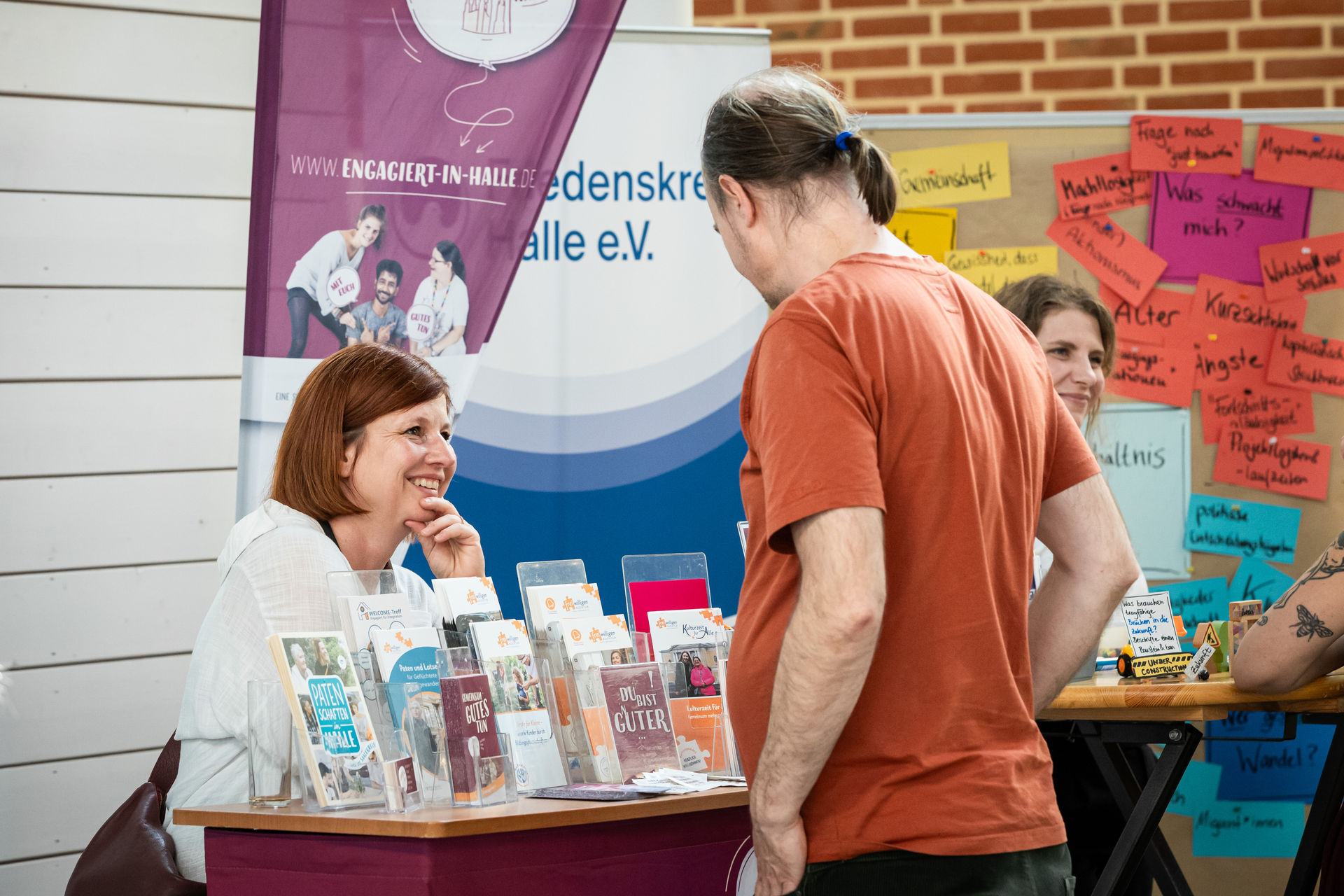
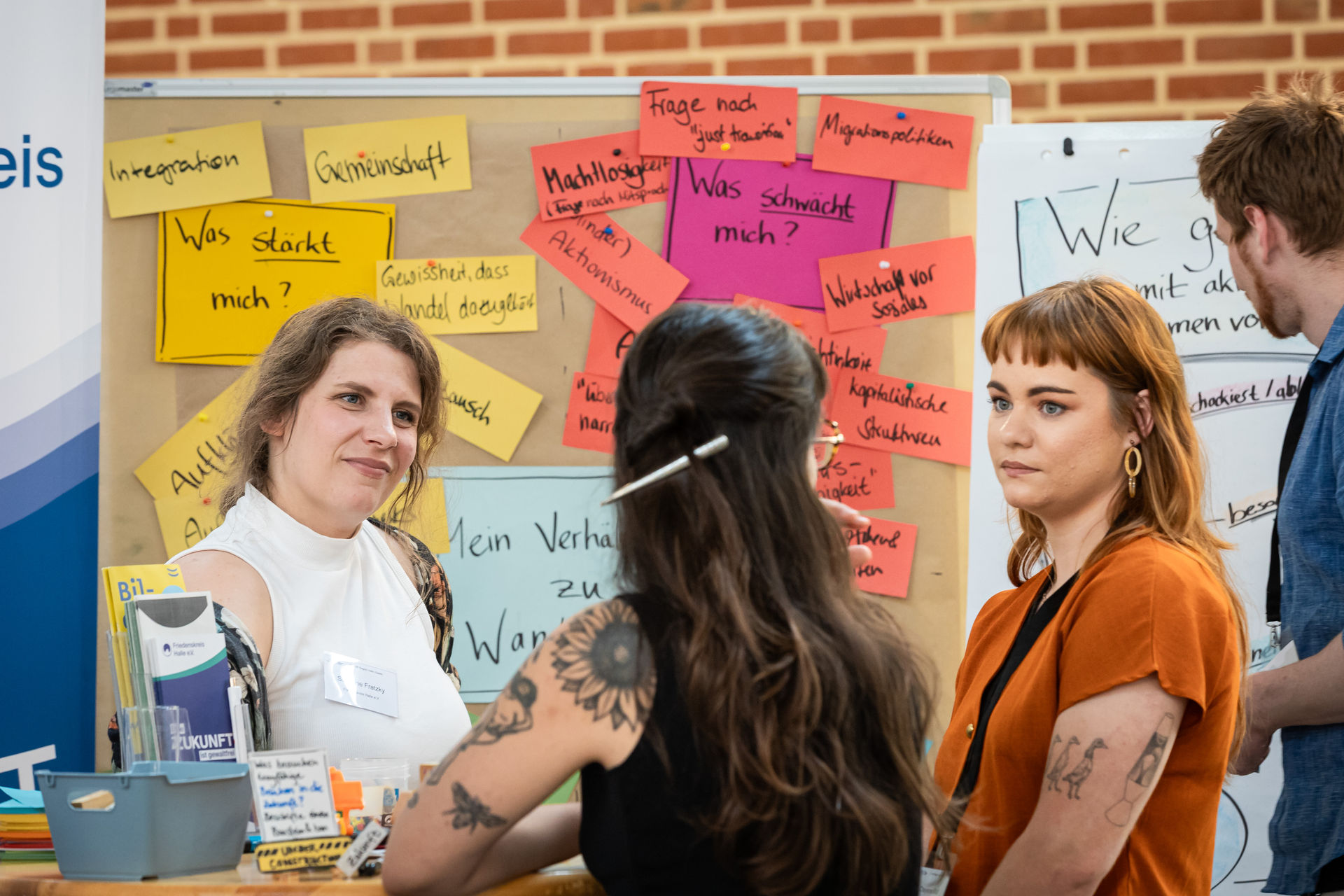
As the event drew to a close, guests flocked straight to the individual stands, engaged in lively discussions with the exhibitors and asked the researchers questions at their respective stations. “I hardly had time to eat, there was so much to talk about. It was really worth it!” (Exhibitor)
We would like to thank all participants, and in particular the exhibitors, for this stimulating exchange, and we are already looking forward to our next “JTC meets the Region” event on 15 October 2026 in the Saalekreis. Further information can be found on our website under “Events”.
List of the organisations and projects presented:
- Arbeitskreis Hallische Auenwälder (AHA)
- Bürgerstiftung Halle
- DiP – Digitalisierung pflanzlicher Wertschöpfungsketten
- Freiwilligen-Agentur Halle
- Friedenskreis Halle e.V.
- HALLIANZ für Vielfalt
- Gemeinschaftsamt/ Peißnitzhaus Halle e.V.
- Landesnetzwerk Migrantenorganisationen Sachsen-Anhalt (LAMSA) e.V.
- losmachen e.V.
- Netzwerk Stadt-Land
- NEB Neues Europäisches Bauhaus
- SALEG Sachsen-Anhaltische Landesentwicklungsgesellschaft mbH
- Salinetechnikum
- science2public – Gesellschaft für Wissenschaftskommunikation e.V.
- Smart City Halle-Projekt der Stadt Halle
- TPG – Treiber für Innovation in der Pflege
- Webwirtschaft Mitteldeutschland