Dr. Alexander Klose
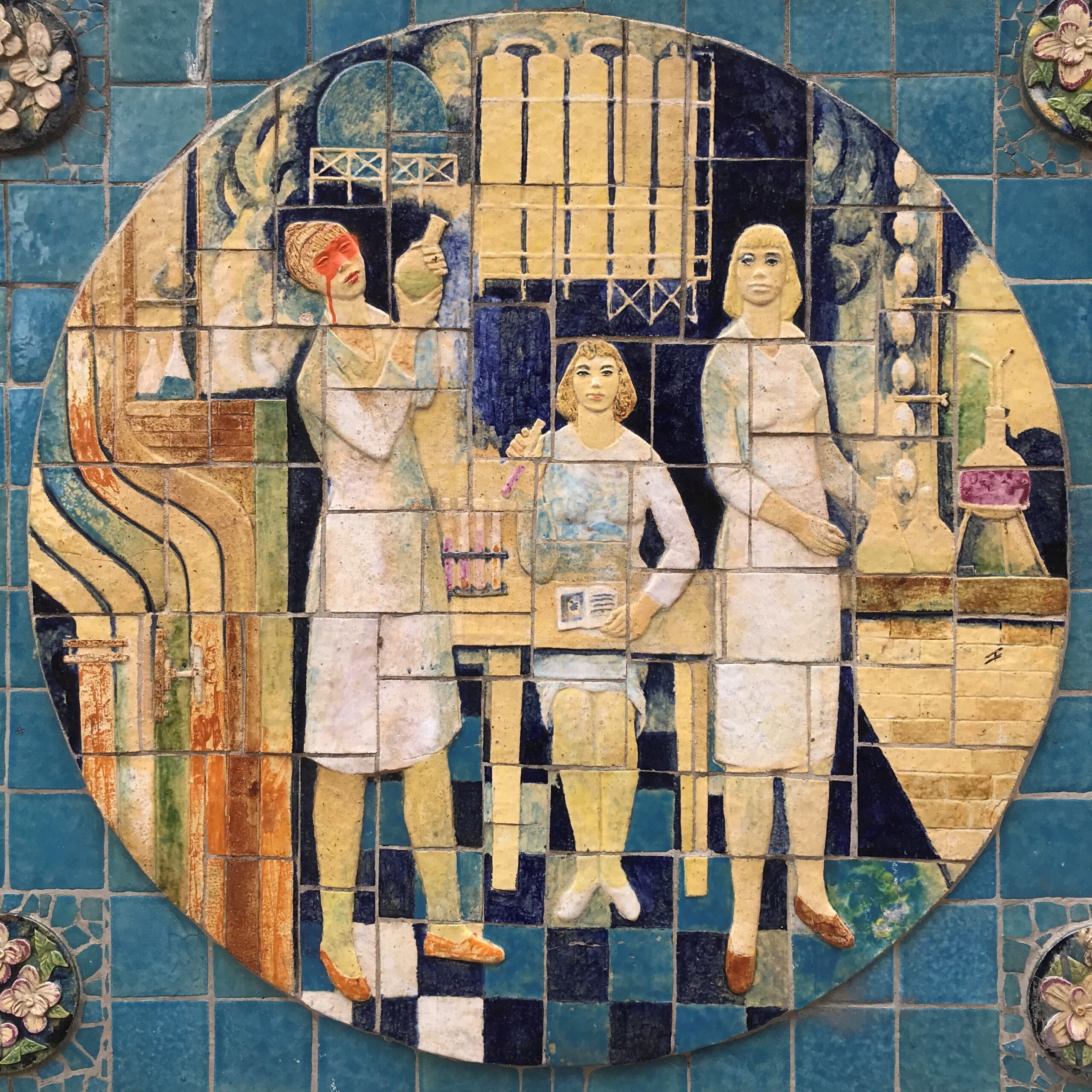
In spring 2025, the Hallesche Chemieforschungsgruppe (HCFG) was formed at ZIRS, the Center for International Regional Studies of Martin Luther University Halle-Wittenberg.
Situated in the cultural and scientific center of the Central German Chemical Triangle, the group pursues the following goals:
- consolidating the foundations for social-scientific, cultural, and humanities-based research on the chemical industry, its products, and their social significance(s);
- investigating the social, cultural, and humanities dimensions of the Central German chemical region;
- networking with research on other chemical regions and chemical geographies, as well as with other socio-chemical questions in German-speaking countries and internationally.
Present at the founding meeting were Sophie Altmiks (JTC), Janine Hauer (Institute of Ethnology, MLU Halle), Jürgen Viet Anh Höpfel (JTC), Alexander Klose (JTC), and Daniel Wolter (JTC). Associated members (as of December 2025) include Steffi Forman (JTC), Julia Ostertag (JTC), Benjamin Steininger (Max Planck Institute for Geoanthropology, Jena), Asta Vonderau (Institute of Ethnology, MLU Halle), and Constanze Zwies (JTC).
A series of texts served as the basis for introducing the thematic fields; these were presented and discussed in the meetings (in alphabetical order):
- Andrew Barry, Manifesto for a Chemical Geography, Inaugural Lecture, 24 January 2017;
https://www.ucl.ac.uk/social-historical-sciences/sites/social_historical_sciences/files/andrew_barry_manifesto_for_a_chemical_geography.pdf - Maan Barua, “Metabolic geographies: Work, shifts and politics,” in: Progress in Human Geography 2025, 49(2), 145–163;
- Deana Jovanović, “Prosperous Pollutants: Bargaining with Risks and Forging Hopes in an Industrial Town in Eastern Serbia,” in: Journal of Anthropology,https://www.tandfonline.com/doi/full/10.1080/00141844.2016.1169205;
- Primo Levi, “Carbon,” in: The Periodic Table, 1987;
- Wilhelm Ostwald, “The Problem of Time,” in: Essays and Lectures of a General Nature (1897–1903), 241–257;
- Nicholas Shapiro, “Chemo-Ethnography: An Introduction,” in: Cultural Anthropology, Vol. 32, Issue 4, pp. 481–493;
- Judith Willkomm, “Field Studies of Field Studies: A History of Science Perspective with a Media-Historical Outlook,” in: Raphaela Knipp / Johannes Paßmann / Nadine Taha (eds.), From the Field to the Laboratory and Back, 175–184.
The following questions emerged as initial guiding questions for the joint and parallel exploration of the socio-chemical field:
- What was it like, what is it like, and what will it be like to live day by day in the immediate vicinity of the chemical industry?
- To what extent can the experiences of the radical transformation of the Central German chemical industry in the years after 1990 be compared with the structural transformation processes currently underway?
- What work processes, everyday routines, and beliefs are embedded in the production and use of chemical-industrial compounds, as well as in the disposal of toxic legacies and hazardous substances and in maintaining the critical infrastructures required for this?
- To what extent are chemical heat and cooling infrastructures part of our social and cultural practices, and what points of departure exist for possible change?
- Which societal metabolic processes shape the production and use of chemical industrial products?
- How does chemical thinking—consciously or unconsciously—influence the social, political, and cultural order of the present?
Since its founding, the HCFG has met once a month, either in person in a small seminar setting and/or in hybrid format. The first two formative meetings took place on 12 and 21 May 2025.
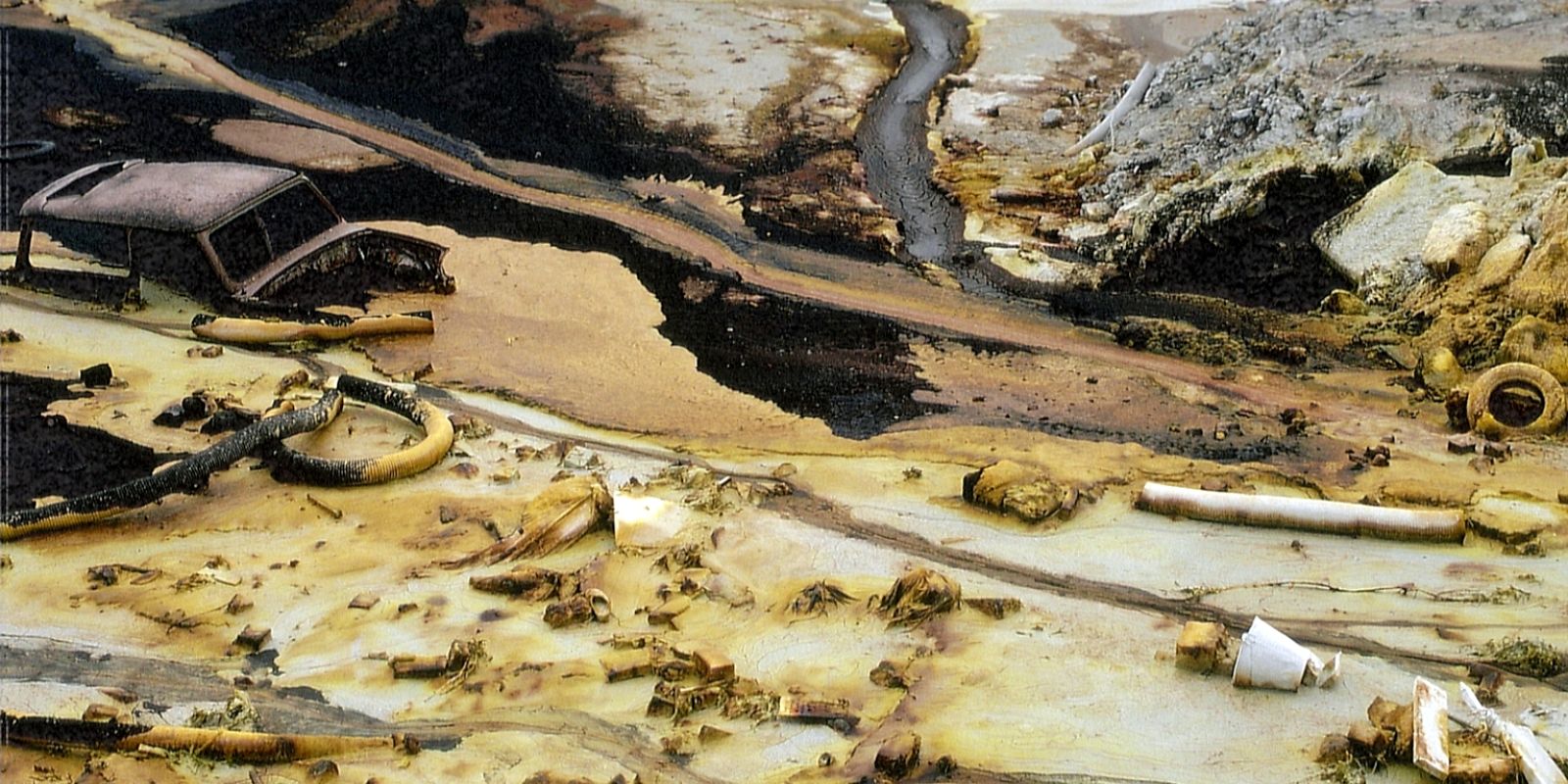
The third meeting of the HCFG was held on 15 July 2025 and, for the first time, included invited external guests in the ZIRS seminar room. Chemist Fred Walkow, former employee of the Wolfen film factory and head of the Bitterfeld Environmental Office from 1990 to 2015, explained to those present the ecological consequences of more than one hundred years of chemical industry history at the Bitterfeld-Wolfen site. Focusing on the late 1980s and early 1990s, Walkow illustrated—during his approximately 60-minute lecture and using numerous examples from his personal and public photo archives—above all the landscape dimension of environmental damage in the region.
Note: This article is an automatic translation of the original post. Please be aware that there may be linguistic inaccuracies or differences in interpretation. You can find the original post here.