First Place: “Amsdorf”
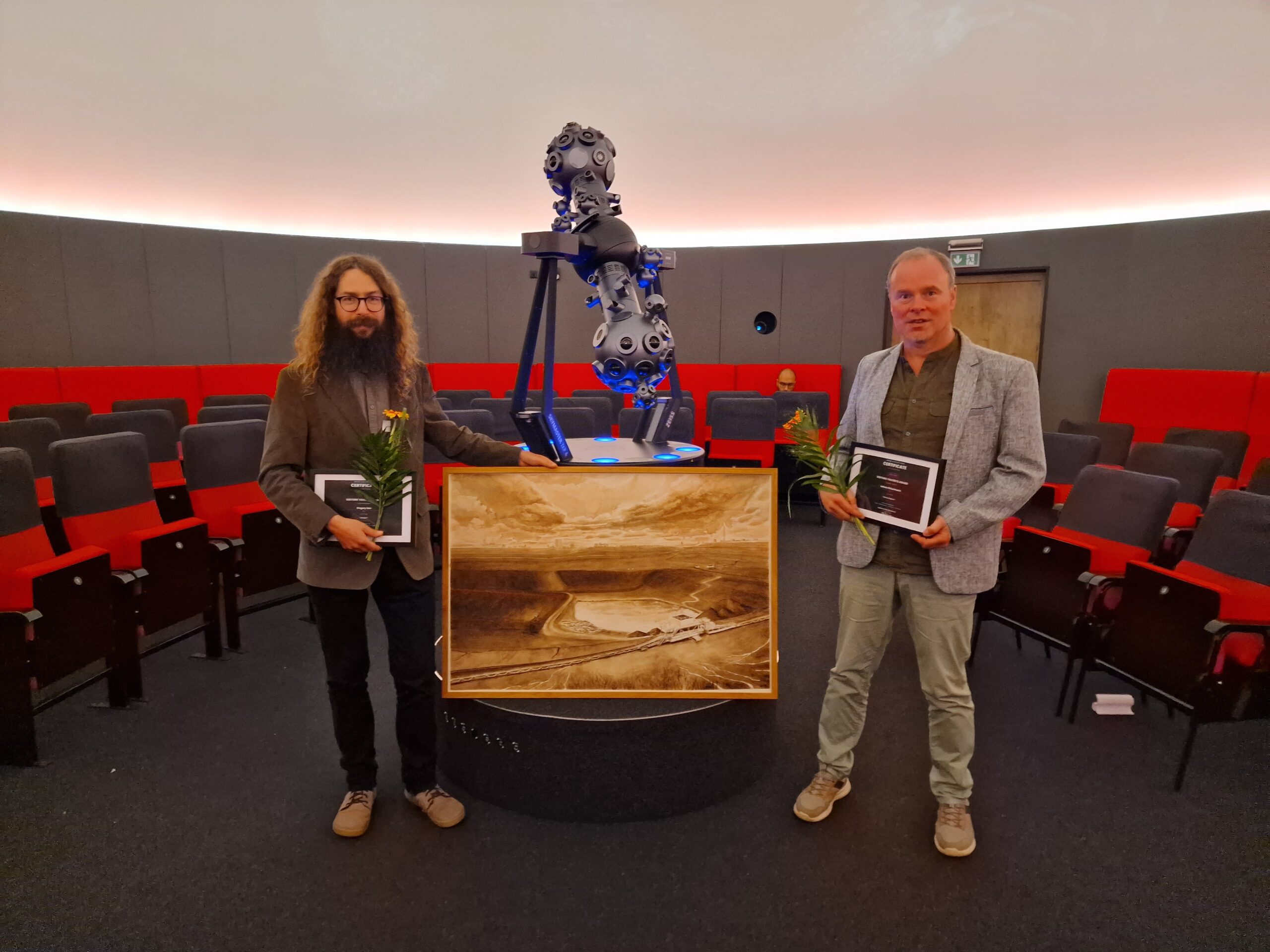
Dr. Gregory Gan won first place for his painting “Amsdorf”. It depicts Romonta, an open pit mine in Central Germany’s mining district, extracting lignite coal to make montan wax. In a trip organized with the help of Thomas Ernst, Gregory visited the mine as part of his research on East German heritage at Just Transition Center, painting several studies, and picking up a sample of lignite coal, a granulating substance that has been compressed from plant matter over millions of years. Together with a colleague, Mathias Stein, they ground the coal and mixed it with binder to make watercolour paint. This landscape is therefore painted from the landscape, fine coal dust and all.
In his pitch, he said:
If for most of history, artists extracted pigments from the landscape—colours such as Sienna umber, Gamboge yellow, and Tyrian purple are named after the places the pigments came from—what kind of story does Saxony-Anhalt’s coal landscape tell? As we have seen in Saxon-Anhalt elections 2026, this landscape was exploited by a political campaign waxing nostalgic about a past that can no longer exist, while scapegoating people who came here to offer their labour, or seek refuge. According to the artist, this artwork reclaims the colour—lignite coal brown—to represent ecological aesthetics, democratic inclusion, and industrial labour heritage to serve as quintessential symbols of Saxony-Anhalt.
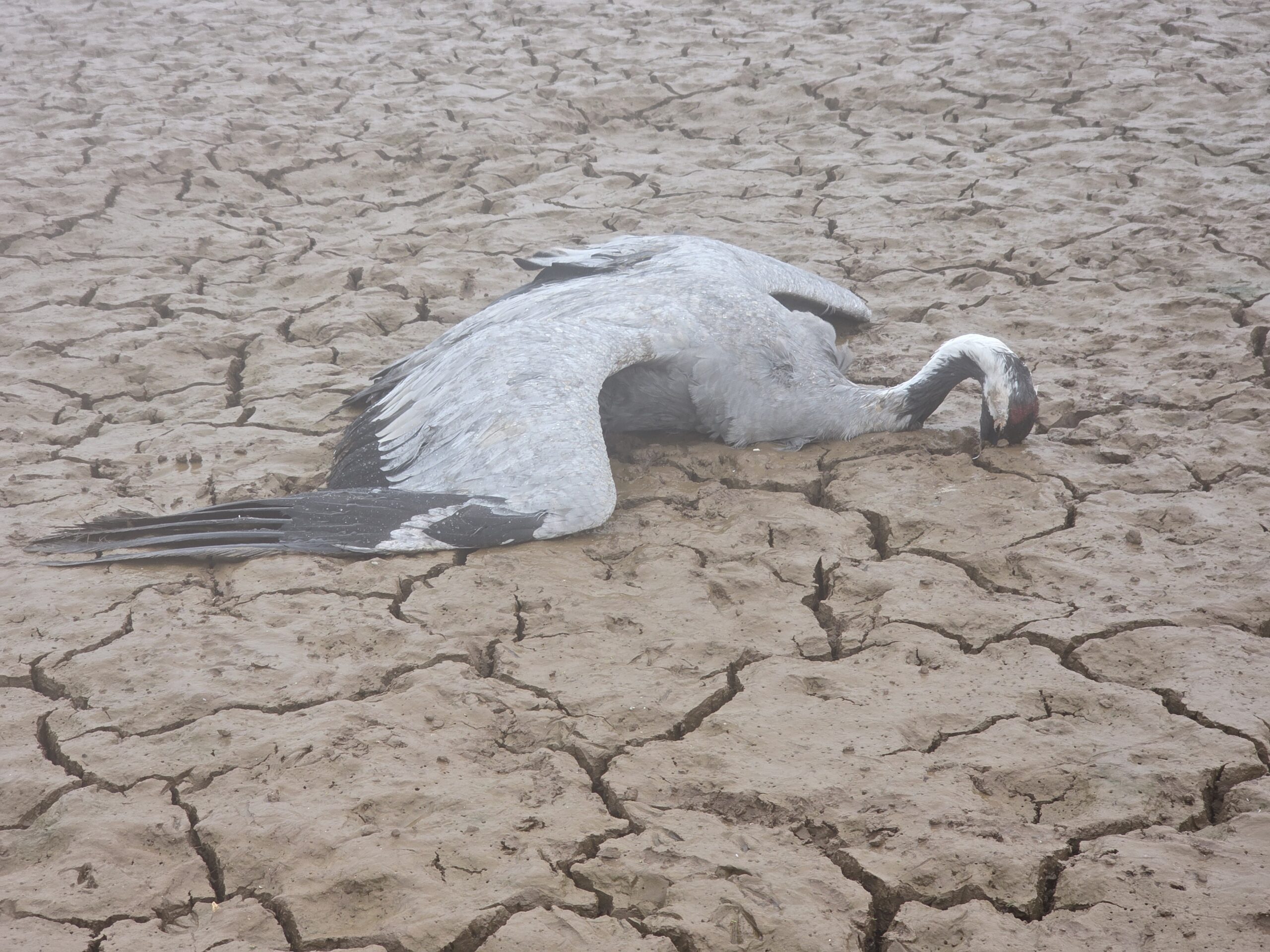
Second Place: “The Last Stopover”
The public voted the photograph “The Last Stopover”, submitted by Dr. Larissa Fleischmann (Team A6), Thomas Ernst (Mansfeld-Südharz district scout) and Mees Menzner (IAS student), into second place. It shows a dead Eurasian crane (Grus grus) on the dried out bed of the Helmestausee reservoir. This artificial lake in Mansfeld-Südharz has become an important stopover site for cranes migrating through Central Europe. In autumn 2025, the site experienced a severe outbreak of highly pathogenic avian influenza (HPAI), commonly known as bird flu. More than 6,000 dead animals were recovered during the outbreak. The photograph was taken by the Mansfeld-Südharz Veterinary Office. It forms part of a Team A6 research project on animal health and structural change. The dead crane on the dried out lakebed symbolises the interconnections between climate change, biodiversity loss and disease outbreaks. At the same time, the image draws attention to the fragility of habitats and raises questions about human responsibility towards animals and the environment.
We thank everyone who visited the exhibition and voted for the two entries!
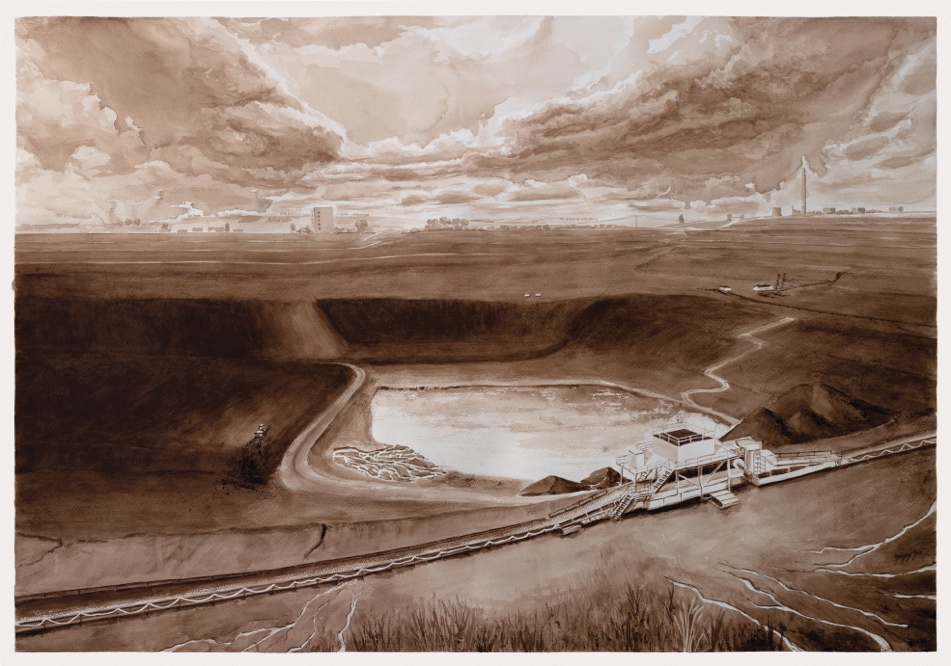
Gregory Gan. Amsdorf. 2026. Coal pigment on paper