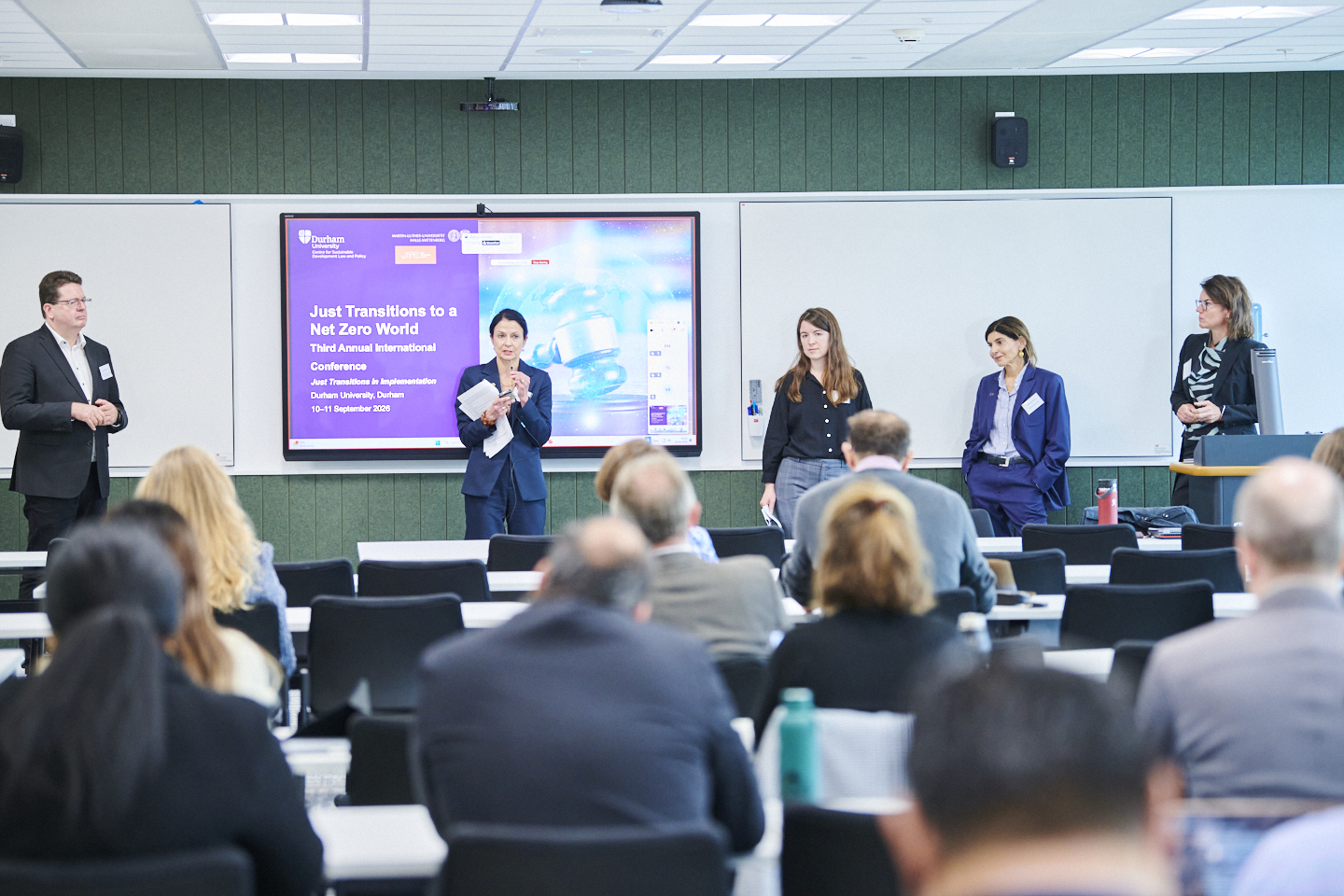
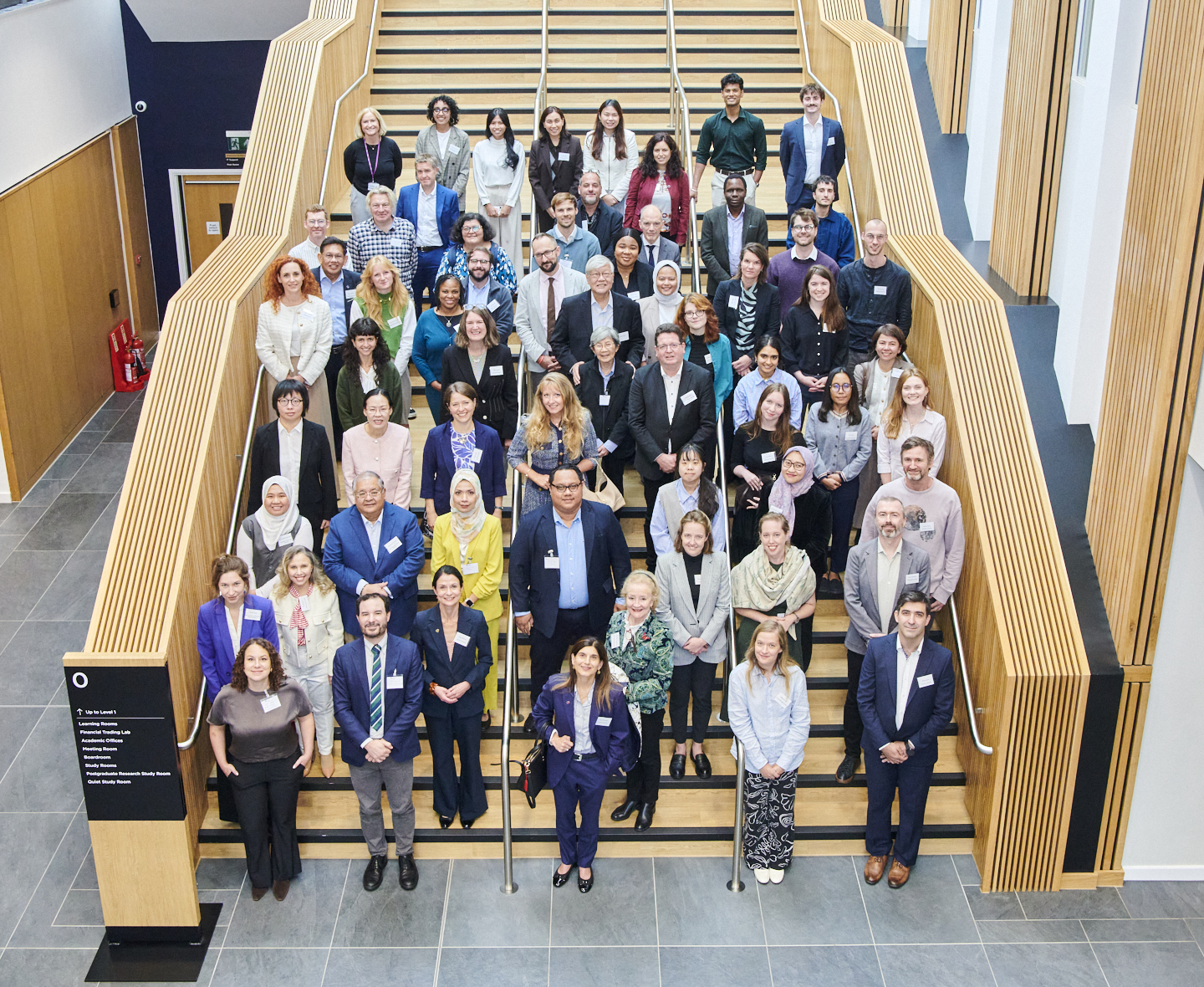
On 10-11 September 2026, Durham University hosted the Third Annual International Conference on Just Transitions to a Net-Zero World, jointly organised by Durham University’s Centre for Sustainable Development Law and Policy (CSDLP) and the Just Transition Center (JTC) at Martin Luther University Halle-Wittenberg (MLU).
The conference brought together over 80 scholars, judges, policymakers and practitioners to examine how commitments to climate action and social justice can be translated into equitable practices. As the transition to a net-zero world accelerates, interdisciplinary and transregional collaboration is essential to ensure that implementation is not only effective, but genuinely just. The conference built on the conceptual foundations developed through the first two annual conferences and shifted attention to the practical challenges of implementation. Discussions addressed key questions such as how can legal, economic, technological and governance frameworks deliver transitions that are not only low-carbon, but also socio- ecologically just?
MLU and Durham University sign Memorandum of Understanding
The event also included the signing of a Memorandum of Understanding between the MLU and Durham University. This agreement formalises and strengthens the long-standing collaboration between the two universities, which has been particularly driven by Prof. Christian Tietje (MLU) and Prof. Petra Minnerop (Durham University).
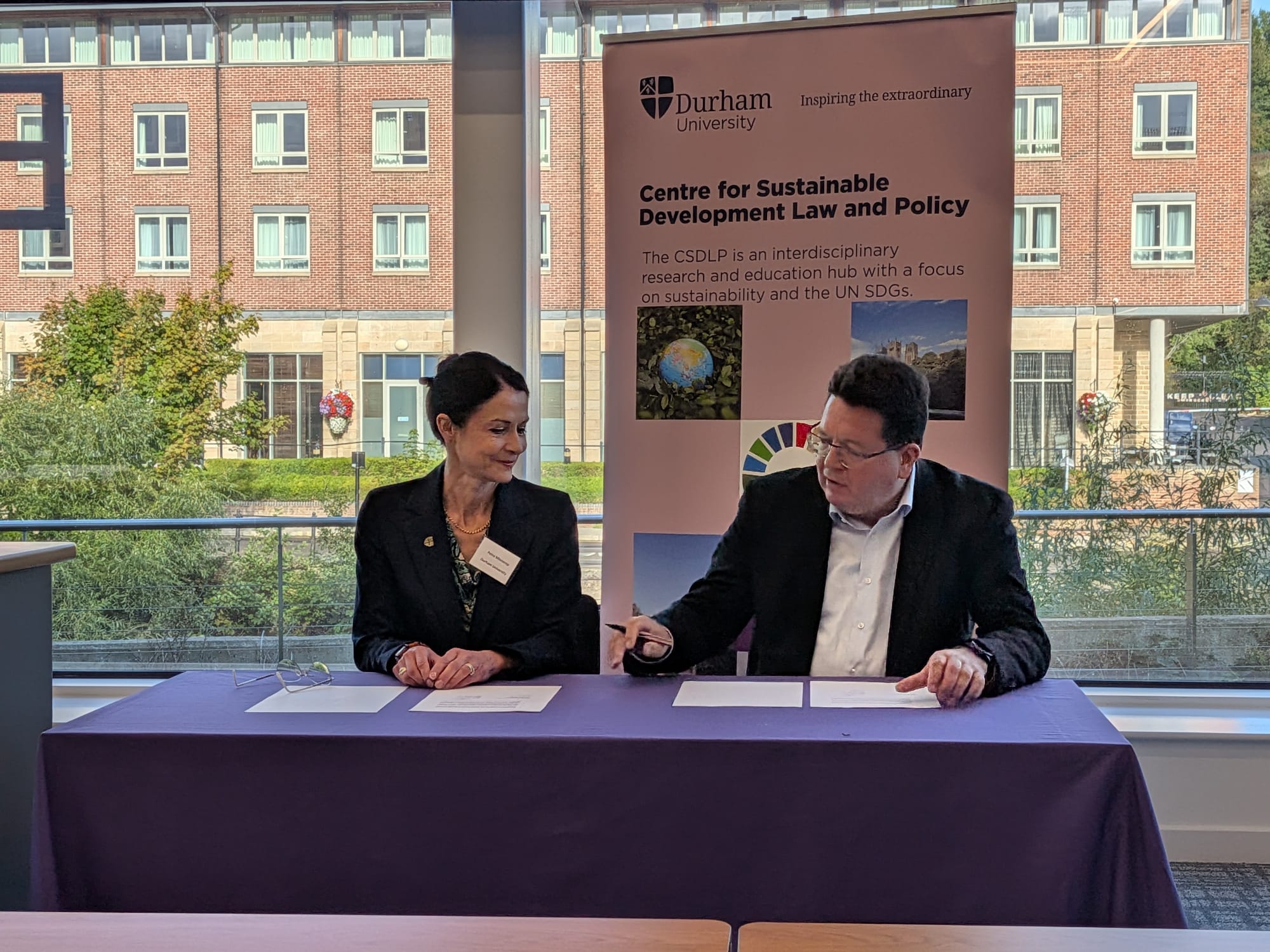
This partnership has created a vibrant platform for ongoing exchange across socio-legal, economic, environmental and policy-oriented research. It also strengthens the shared aim of developing research that is analytically rigorous, interdisciplinary and relevant to the communities, institutions and policymakers navigating profound ecosocial transformations.
A Transregional and Interdisciplinary Perspective
The conference reflected the JTC’s research agenda, particularly the work of the research group “Transregional Just Transition Governance” on how law and governance can navigate the interdependencies between economic needs, climate objectives and social justice across interconnected regions.
The programme included, for example, a dedicated session on ‘What makes transitions ‘just’?’, chaired by Prof. Christian Tietje, Professor of Public Law at Martin Luther University Halle-Wittenberg and Chair for Public Law at the JTC. PD Dr Katrin Seidel, Senior Researcher and Team Leader of the JTC’s Transregional Just Transition Governance team, presented research on “Rethinking Climate Responsibility as Human Duty” for just transition, drawing on the African (Banjul) Charter and insights from fieldwork at UNFCCC COP30. She argued that climate debt owed by historically high-emitting countries should not remain a largely unmet financing target, but should be instead constitutionalised as a distinct, legally enforceable human duty grounded in the international principle but Common but Differentiated Responsibilities and Respective Capabilities (CBDR-RC) drawing lessons from the African Charter on Human and Peoples’ Rights’ duty structure. Moreover, Chiara Gemoll, Research Associate at the JTC, presented her doctoral research in the conference poster session. Her work examines the role that novel Sustainable Investment Facilitation Agreements (SIFAs) play in implementing a just European investment policy. Her work focuses on the EU-Angola SIFA, which was implemented in September 2024. She discussed how the agreement resets the focus of international investment law to building resilient administrative structures that ensure more predictability, foreseeability and consistence of investment decisions.
Other contributions at the conference addressed epistemic justice, greenwashing, the operationalisation of climate responsibility, and the possibilities and limits of indicator-based approaches. For example, the conference’s judicial programme featured Judge Maria Teresa Infante Caffi of the International Tribunal for the Law of the Sea and Justice Sapana Pradhan Malla of the Supreme Court of Nepal. Their contributions highlighted the importance of courts and legal institutions in interpreting climate duties, protecting rights and addressing conflicts arising from environmental and energy transformations.
Another particularly thought-provoking exchange took place in the session “Political Ecology, Representation and Indigenous Rights in the Transition,” chaired by Dr. Katrin Seidel, where presenters explored whose knowledge, interests and rights are recognised in transition decision-making. The session brought together a shared political-ecology lens but from different perspectives, ranging from political theory, feminist geography, environmental anthropology, political economy and international economic law. Jointly, the contributions demonstrated that energy transitions are socio-ecological negotiations over power, knowledge, authority, materiality and the meaning of justice. For example, Dr Stefan Knauß, Senior Researcher and Team Leader of the JTC’s Transformative Learning research group, presented ‘Spirits, Proxies, and Silicon: Charting the Dangers and Opportunities of Representing Nature’. His contribution examined the ethical foundations and practical implications of rights-of-nature approaches, focusing on both opportunities and political risks associated with different forms of representation.
The discussion highlighted several common concerns:
(1) Formal representation mechanisms, including procedural consultations, legal rights of nature and AI-mediated forms of representation are not good enough – as they may obscure interests and reproduce colonial or gendered power relations unless Indigenous governance, socio-ecocentric norms and feminist analyses are explicitly foregrounded.
(2) The various ways nature representation is framed affecting who is granted agency and whose interests are legitimised in policy and decision-making
(3) The question of what knowledge counts is inseparable from the question of who is (not) represented and who has (not) the authority to define transition goals.
Connecting research and practice, looking ahead
Throughout the two-day conference, a recurring theme was the need to bridge the gap between international and regional political commitments and concrete implementation. Discussions considered the roles of courts, local authorities, workers, communities, financial institutions, transnational corporations and civil-society organisations in shaping transition outcomes, as well as the growing use of artificial intelligence and data-driven tools in climate governance.
Just transitions must address unequal responsibilities and vulnerabilities, recognise diverse forms of knowledge and authority and create meaningful opportunities for affected actors to participate in shaping just transitions. They must also remain attentive to the transregional effects of law, finance, trade, investment, technology and resource extraction.