
Could an artwork become a tool for initiating new, and creative forms of dialogue about the region? Trying an artistic dialogue with paints made of the post-mining landscape.
For much of human history, people associated particular colours with landscapes. If pigments such as Sienna umber, Gamboge yellow, and Tyrian purple tell the history of the regions where these colours came from, what kind of story does Saxony-Anhalt’s post-mining landscape tell? Could an artwork become a tool for initiating new, and creative forms of dialogue about the region? And finally, can the nature of artistic media itself impact how people understand relations between technological, material, and social processes? A series of paintings created by the researcher in the Central German Mining District in 2026 has initiated precisely these types of conversations, fostering dialogue about a landscape in transformation, and creating far-reaching impact in the region.
Four large-scale monochrome paintings appear as straightforward representations of industrial and urban landscapes; however, together with industry and research partners, they were created using an innovative process, which used the materials of the landscape itself to create watercolour pigments.
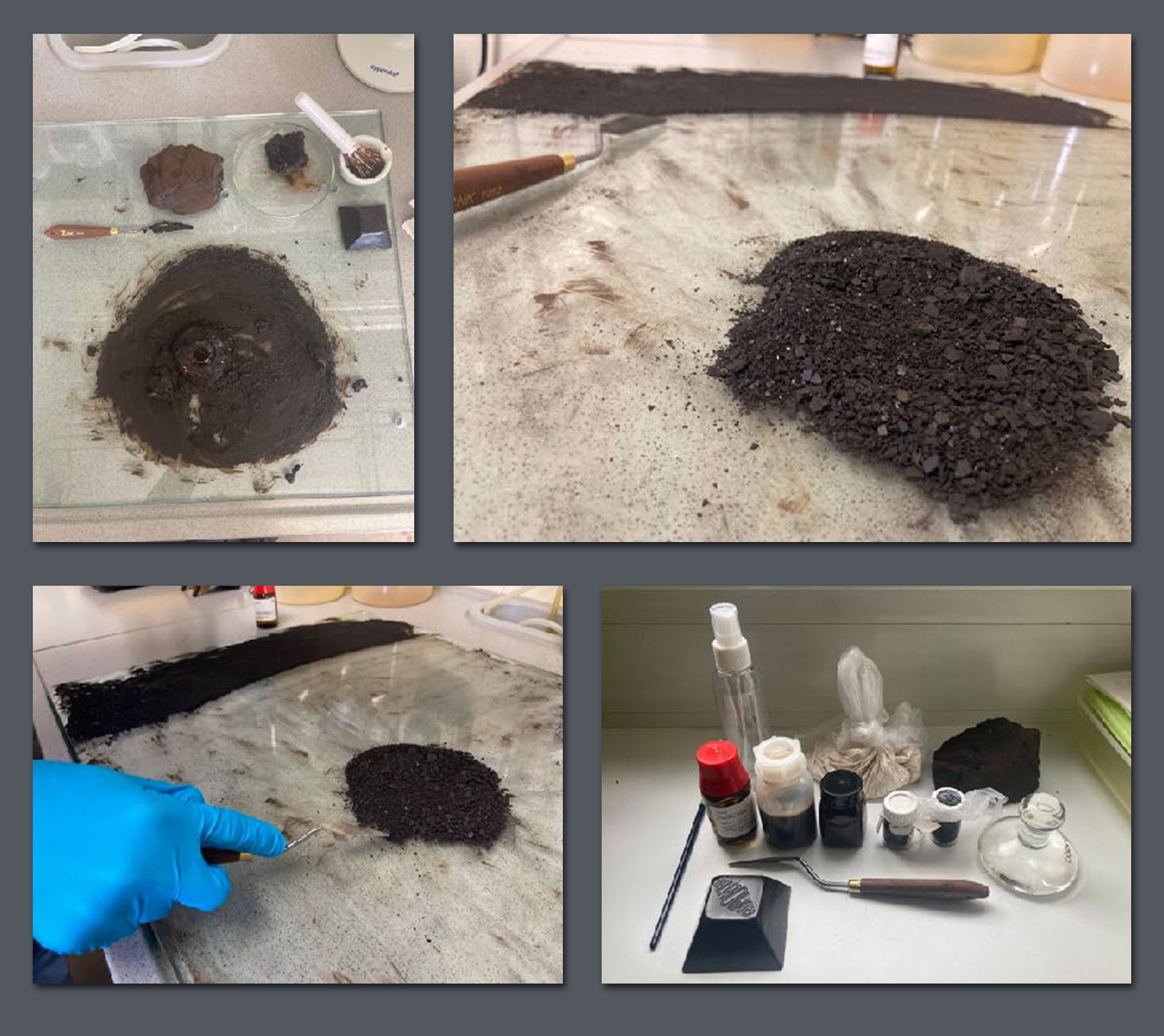
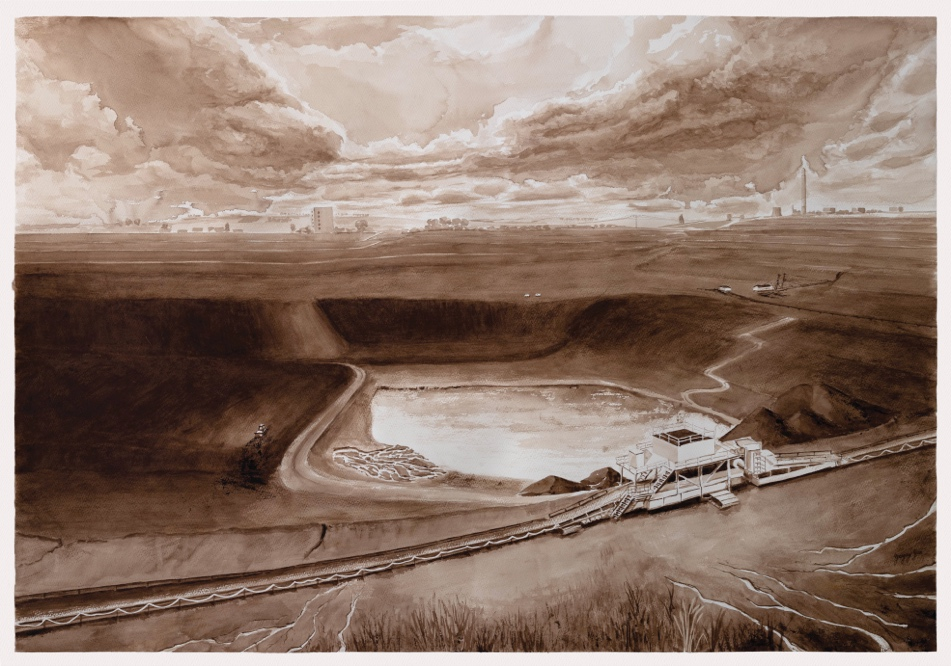
Lignite coal from the coal mine ROMONTA Umwelt- und Recyclingzentrum GmbH, was turned into paint and used to create the painting Amsdorf.
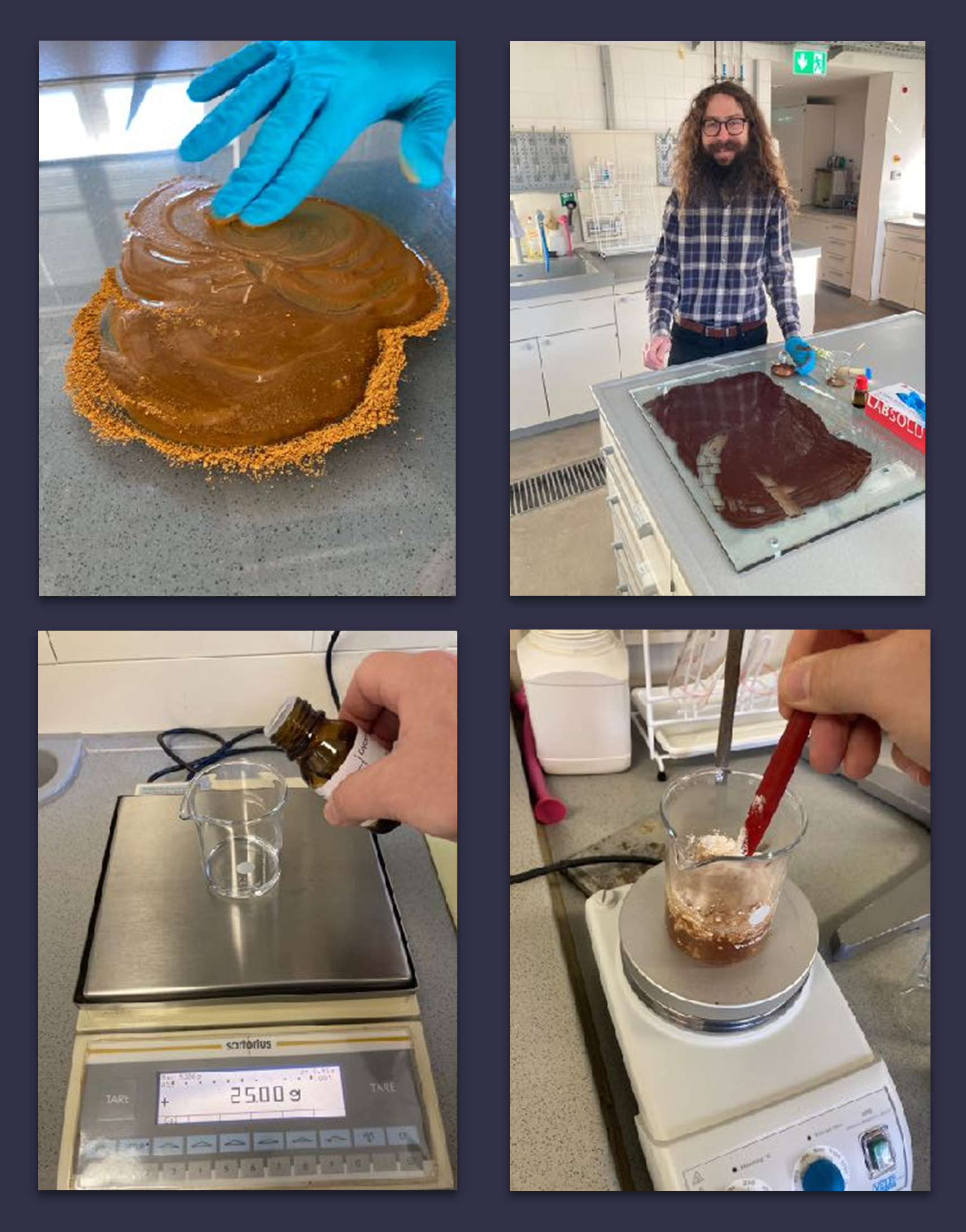
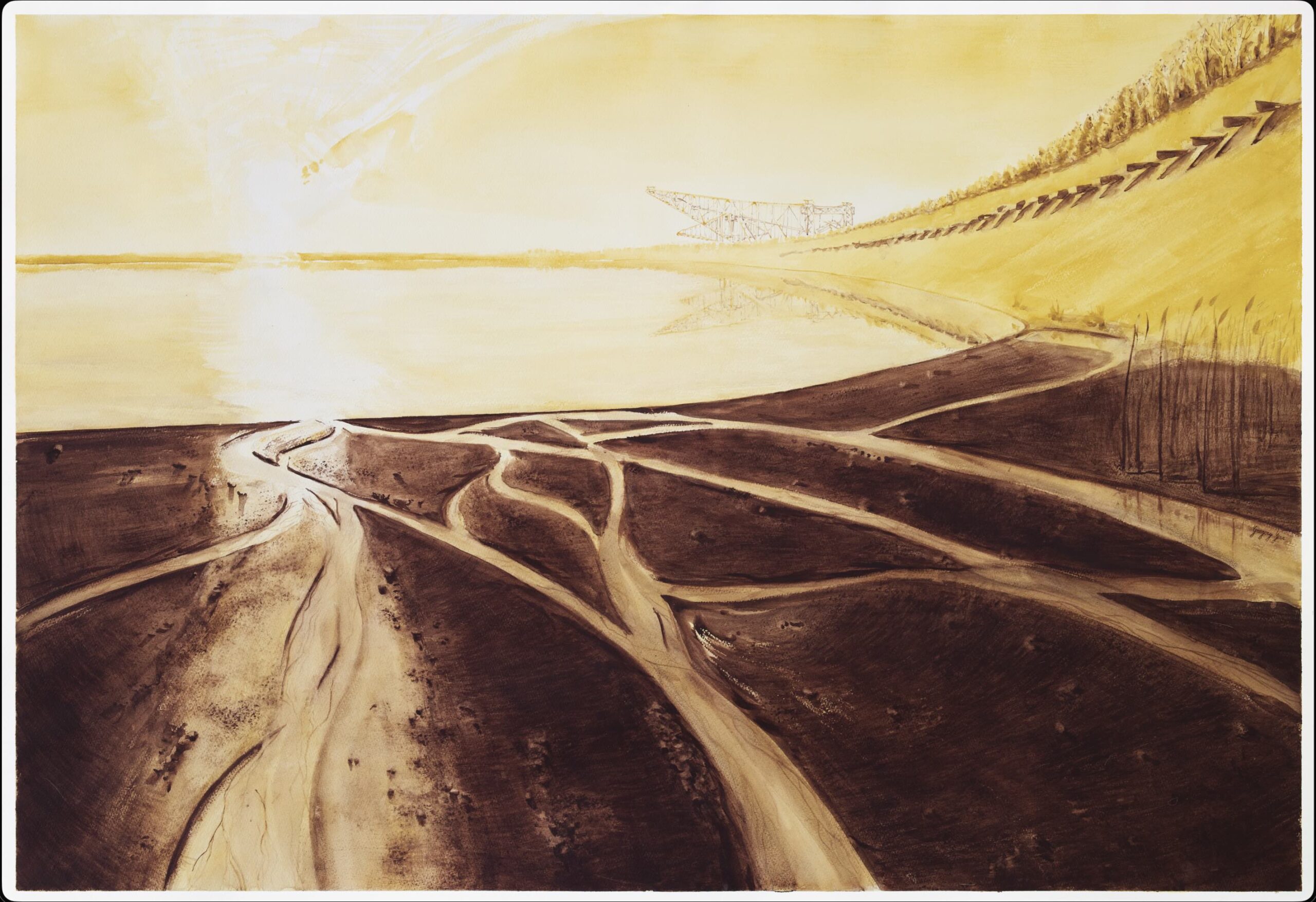
Goethite and hematite derived from soils of the post-mining Lausatian landscape were used to paint “Lausitz”.
Raw materials bring us back to earth, but in so doing, they open up complex questions about what can be termed “natural,” and what gets modified by human innovation. These questions were readily activated both during research production, and research dissemination.
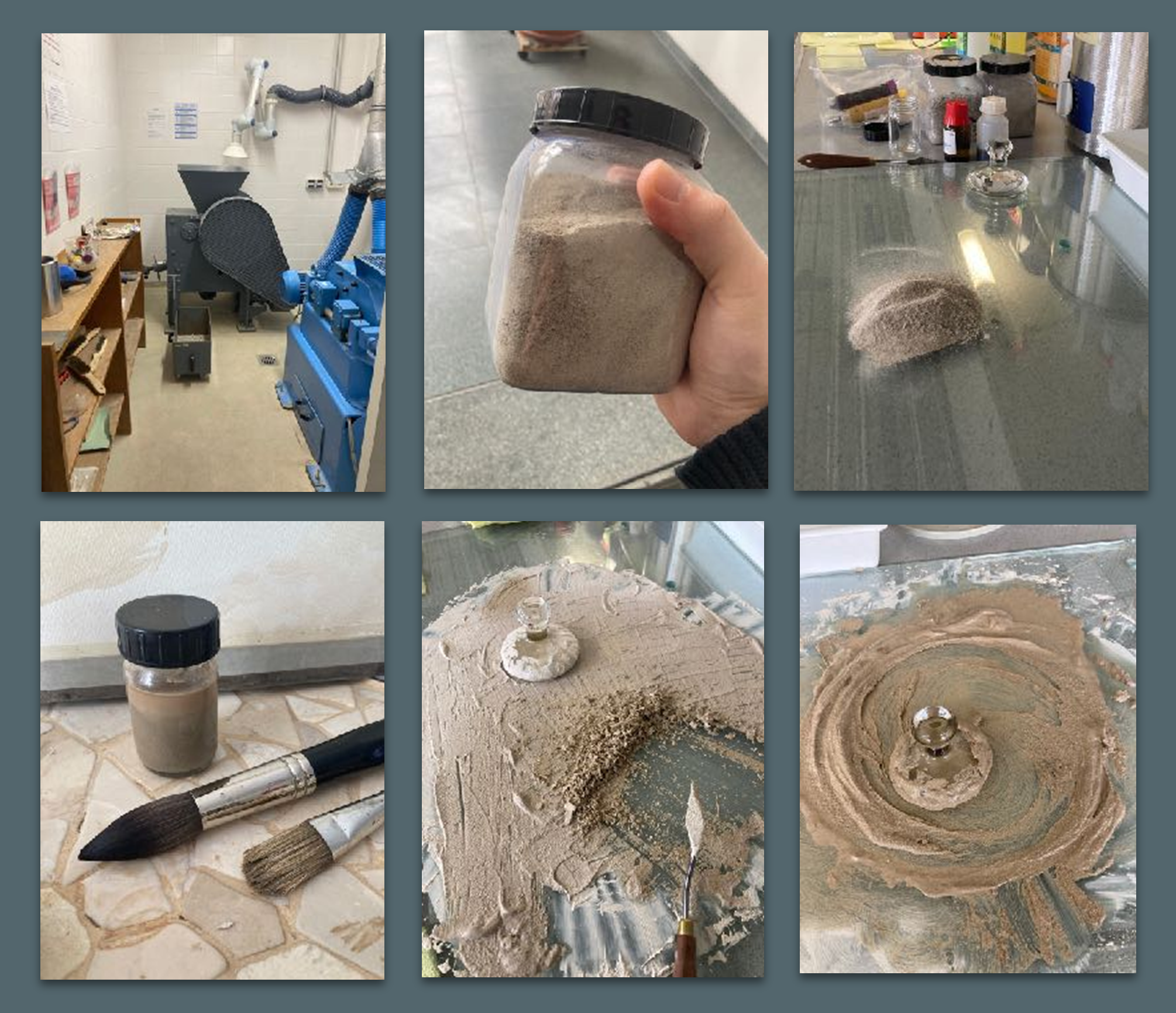
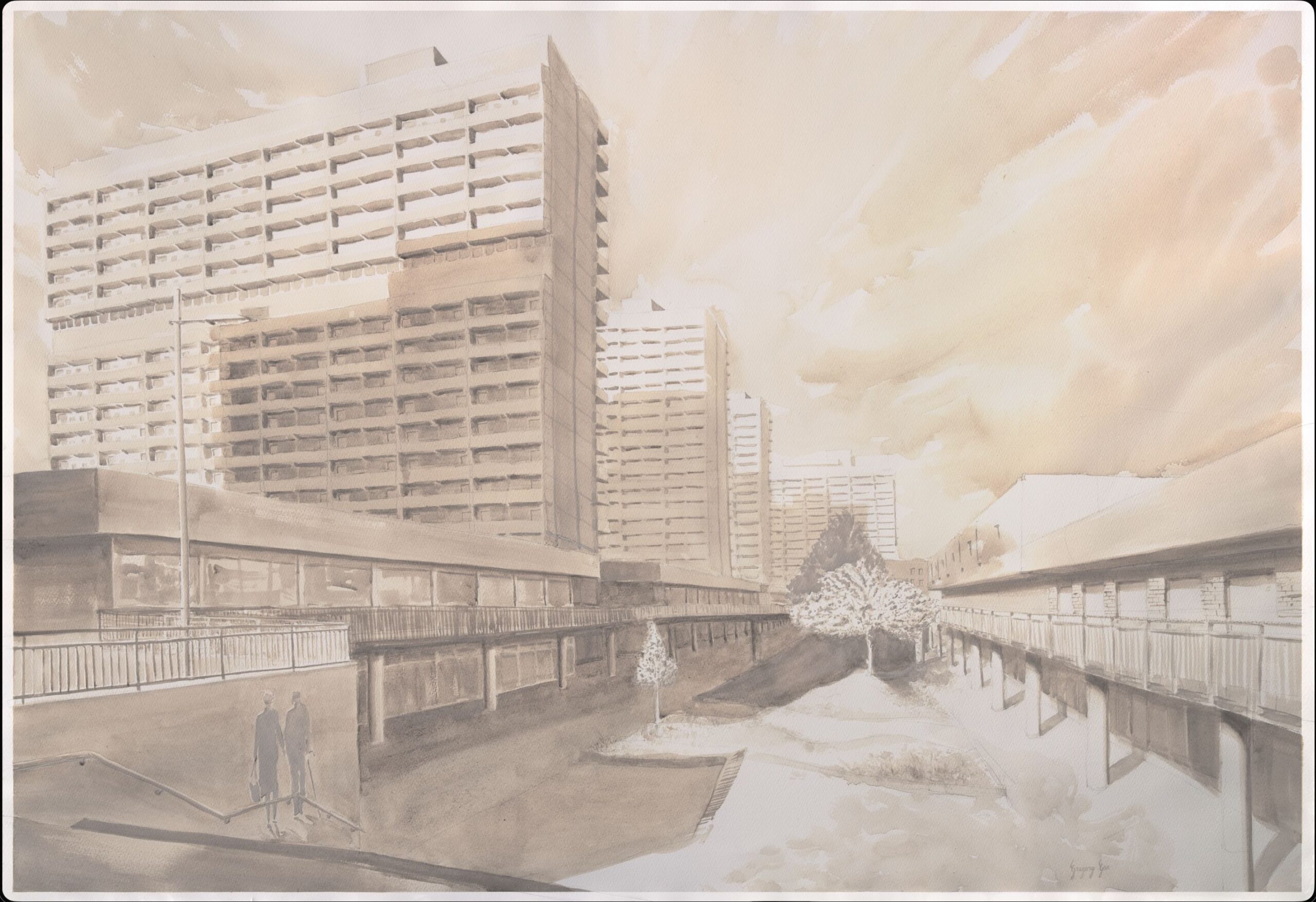
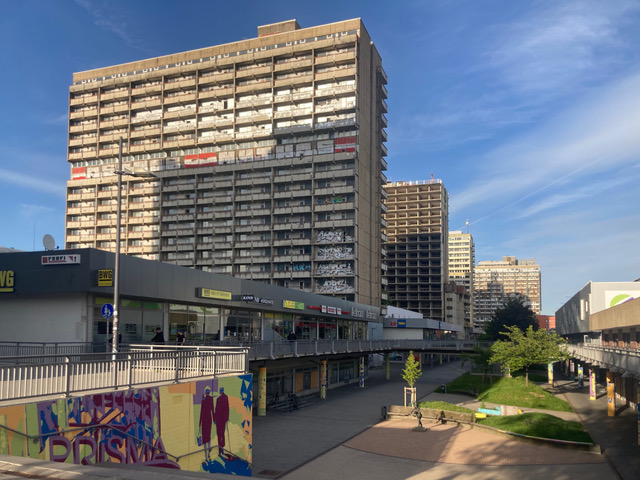
Concrete gathered from a construction site served to represent Halle-Neustadt, a former GDR housing estate, now under redevelopment.
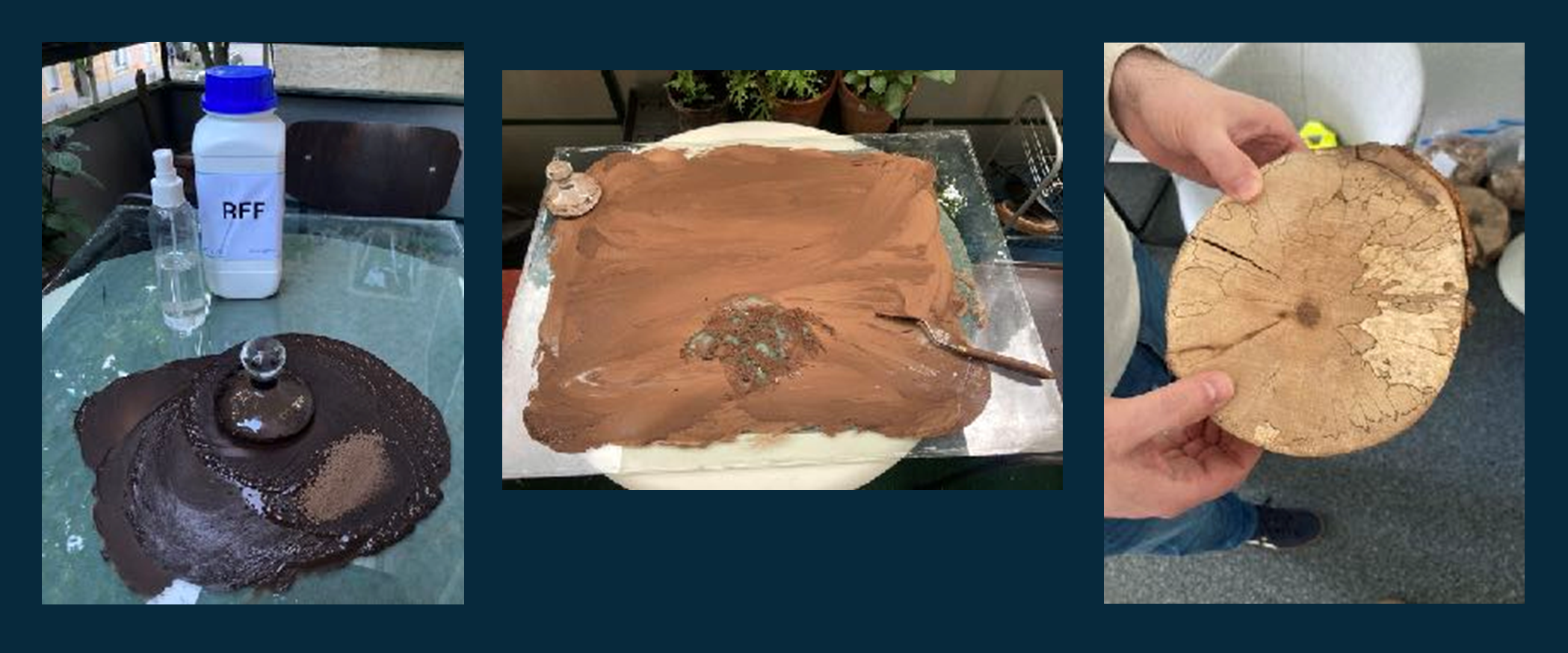
The last painting of the series, “Leuna”—painted using RFF, or renewable functional filler—involved collaborating with UPM Biochemicals, using renewable paint that the company pioneered as a replacement for fossil-derived carbon black.
Transfer Activities During Research Planning
Each of the four paintings involved transfer activities, beginning with initial planning and site visits, and ending with diverse research outputs. The planning process involved in painting Amsdorf involved collaborating with JTC Revierscout Thomas Ernst who arranged for necessary permissions, and who connected Romonta management and workers with the researcher and a fine art photographer. A site visit enabled the photographer to develop a novel photographic process by using coal pigment to develop large-scale photographic prints. It also permitted Dr. Gregory Gan in collaboration with soil scientist Dr. Mathias Stein to produce lignite-derived paint, which was used to create a large scale painting based on sketches carried out on site.
The pigment from the Lausatian Lake landscape was similarly created in consultation with Dr. Mathias Stein, whose research team investigates soil remediation strategies in the postmining Lausation landscape. The painting Halle-Neustadt is based on Dr. Gregory Gan’s own fieldwork expertise researching postmigration in postsocialist urban contexts. It was created using concrete pigment, extracted from a construction site in Halle-Neustadt.
Planning for a site visit to Leuna began a year earlier, JTC Innovation Team A1 “Chemistry in Transition“, organized a site visit to the chemical factories. The creation of the painting Leuna was coordinated with Revierscout Dr. Conny Deimer, and was curated by Prof. Dr. Gerd Unkelbach, the head of research and development at UPM Biochemicals. Each of the site visits resulted in photographs, sketches, and the gathering of materials from the landscape. In this last case, Prof. Dr. Unkelbach prepared a small sample of RFF, a material emblematic of the region in transition, from which the researcher first created a watercolour paint, and then the painting.
The four paintings in the series were created in cooperation with diverse actors, beginning with industry partners, fellow researchers, and members of the public. The four paintings were completed in June 2026, but have already made a significant impact in the region, having reached diverse corners of Germany, having traveled to the European Parliament, and beyond.



Research Dissemination
The finished paintings have fundamentally impacted the conversation concerning the Saxon-Anhalt landscape. In early June 2026, the four paintings traveled to Brussels, where they were presented as part of the European Commission’s Summer Reception of the Saxony-Anhalt Regional Representation. At the event, Ursula von der Leyen, the president of the European Commission, welcomed representatives by stating, “Saxony-Anhalt is crucial to our European independence. We need you here with us in Europe.” This inaugural event set the tone for the way the paintings would be subsequently exhibited, touting ecological aesthetics and democratic inclusion, which have become emblematic of a landscape in transformation.
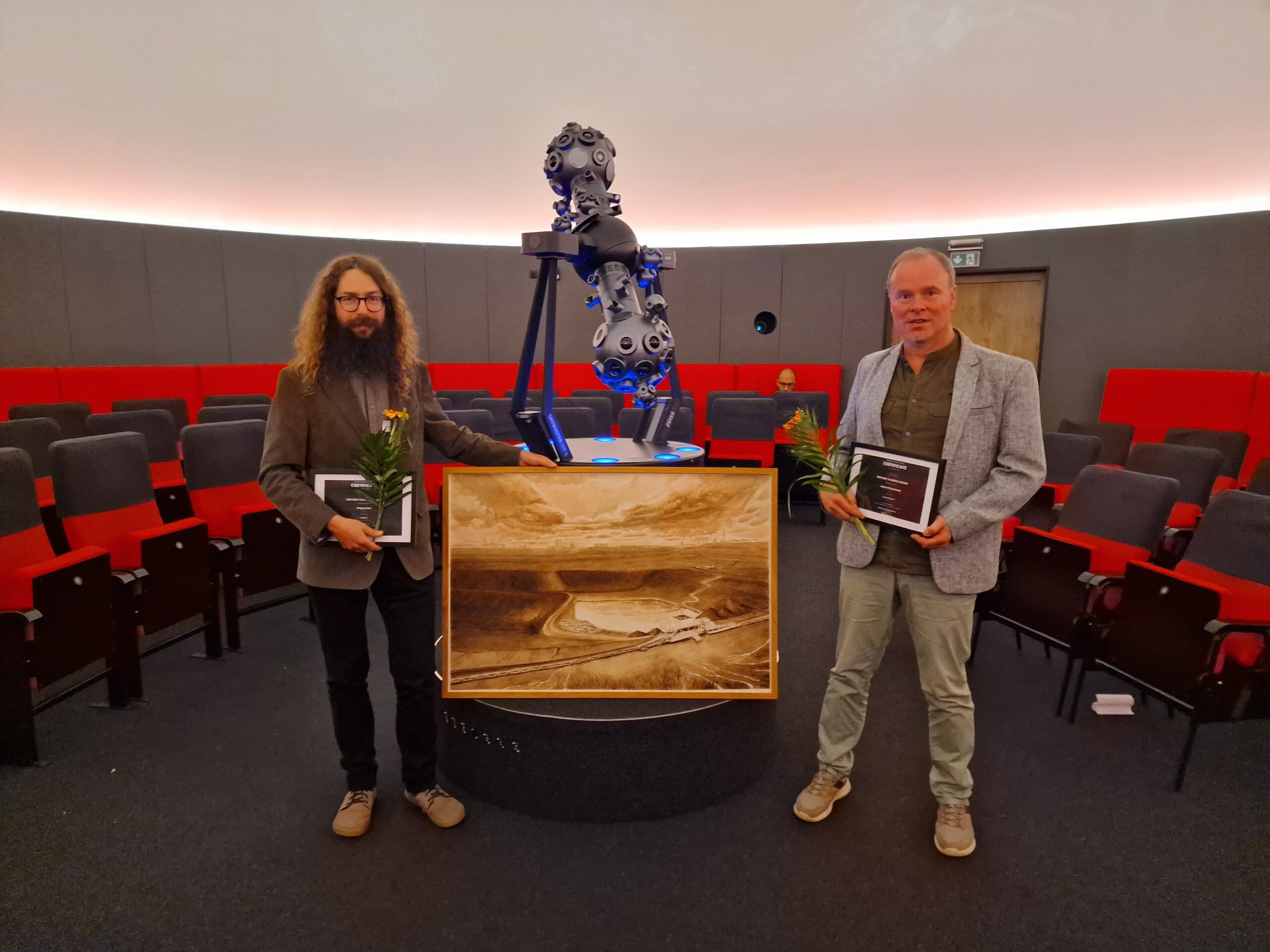
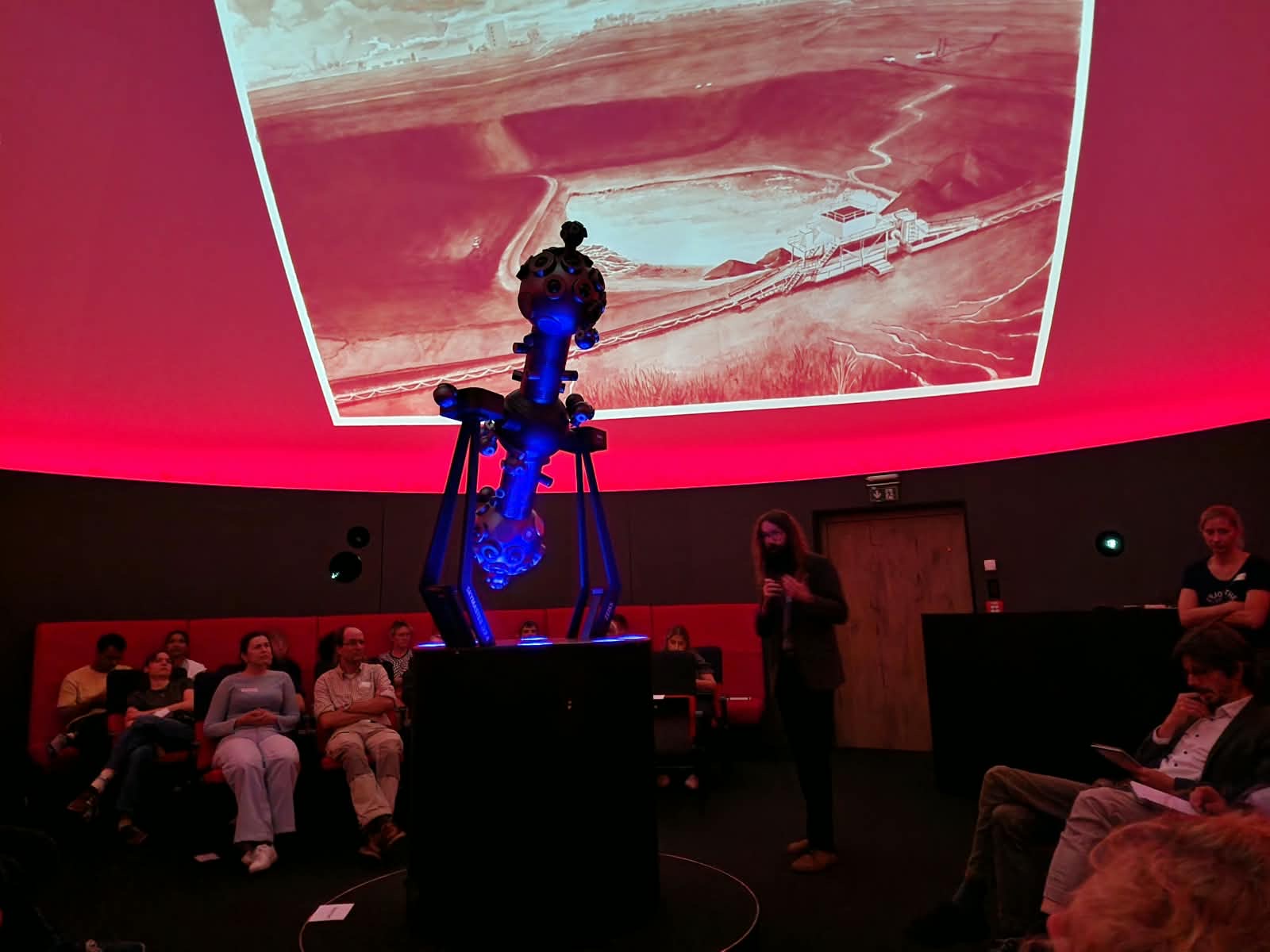
The painting Amsdorf was selected to take part in the Werkleitz Festival’s 2026 program, Früher oder Später, supporting the festival’s theme with its emphasis on deep, geological time. It was also selected to take part in Martin Luther University’s image contest, where among several dozen competitors, it garnered First Prize in a public vote. The researcher subsequently presented the painting in a science pitch under the domed roof of the Halle Planetarium. The painting has now been submitted to Current Anthropology’s image contest, a top-tier academic journal, and if successful, it will become a cover image for all 2027 issues.
Lausitz, representing a post-mining landscape, was used to illustrate the panel “Real Existing Degrowth” at Pollen2026, the Political Ecology Network’s annual conference in Barcelona, Spain. It has now been reproduced in prints for use by Dr. Mathias Stein’s team in promoting transfer activities, especially in their outreach work in the region.
A reproduction of Leuna was created as a fine-art print, framed, and gifted to Prof. Dr. Gerd Unkelbach as a public relations gesture following his keynote presentation at “JTC Meets Region: Saalekreis”, a public-facing event attended by Saalekreis Revier community stakeholders.
HaNeu represents the Halle-Neusadt district of Halle (Saale), ordinarily viewed as a place of mounting ethnic and social segregation. However, Dr. Gan’s research showed that while prejudices about the neighbourhood circulate in media reportage, residents show great affinity towards their neighbours. The painting therefore aims to create an alternate vision of the district, facilitating a new view of neighbourly belonging. The painting has now been selected as an illustration for the book Halle-Neustadt nach 89 / 90. Prisma der Transformation in Ostdeutschland, due to be released this year.
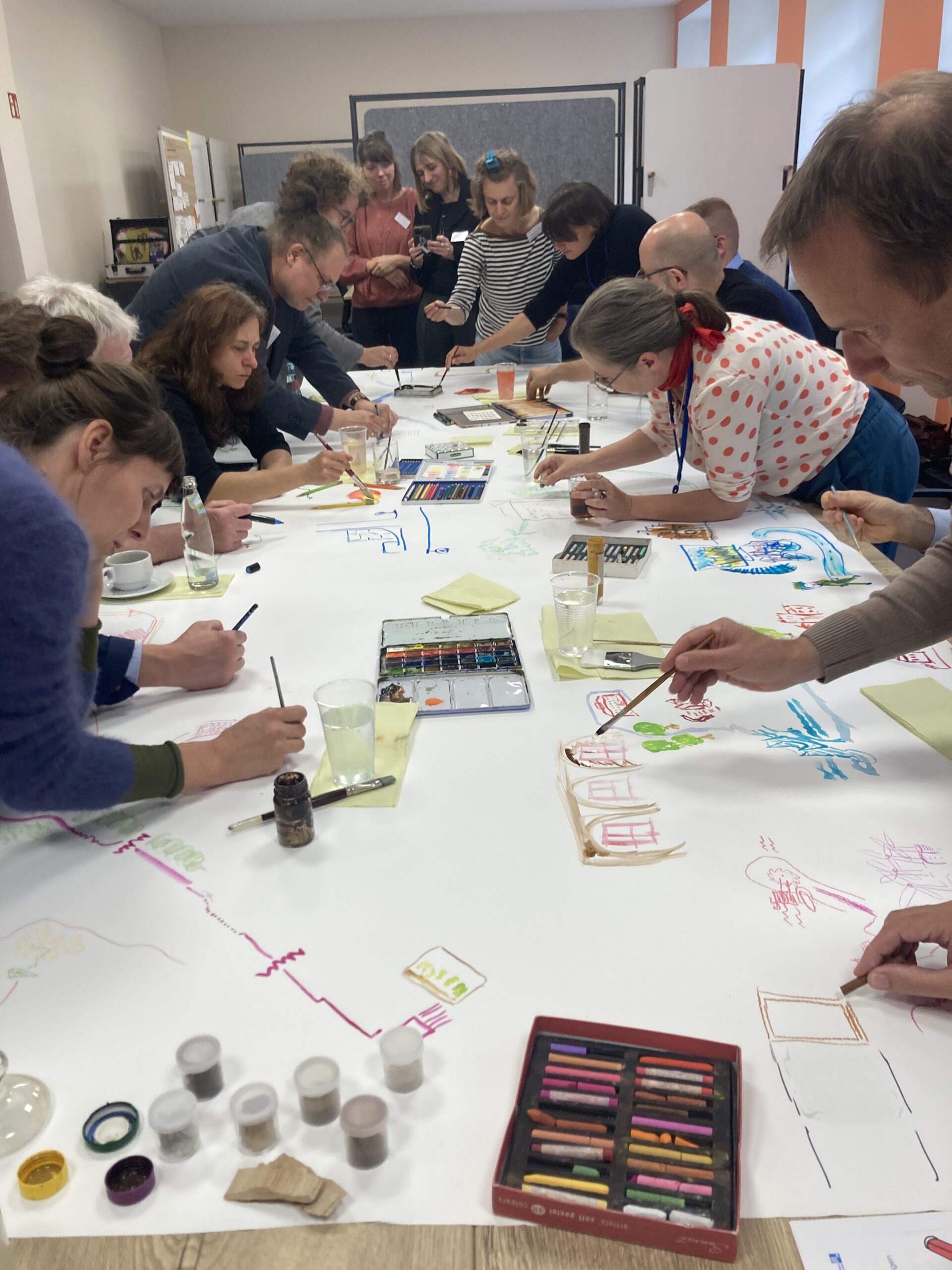
All four paintings were exhibited at the public event “JTC Meets Region: Halle (Saale)” held at the Saline Museum in the Summer 2026, and presented as illustrations at the “Utopia Advice Booth” organized together with Dr. Alexander Klose. They were also recently activated during a “Revier Trialog” organized by the Institut für Strukturwandel und Nachhaltigkeit (HALIS), an event that invited Saxony-Anhalt stakeholders of structural transformation to imagine alternative transformation pathways. Using paintings as illustrations for the way materials inform contemporary representations of Saxony-Anhalt, Dr. Gan invited workshop participants to paint together using pigments collected from the landscape, actively imagining a landscape in transformation with the very people carrying out this important work.
The paintings will feature again at the Structural Change Conference (SWT26) with BBSR: Bundinstitut für Bau-, Stadt- und Raumforschung in November. All four images have now been framed using sustainable materials from Frameworks, a sustainable frame shop, and assembled by the researcher himself. They are currently on public display at LegalTech Lab at the Just Transition Center and can be visited during regular opening hours (8 a.m. to 4 p.m.), during events at the Lab or on request.
