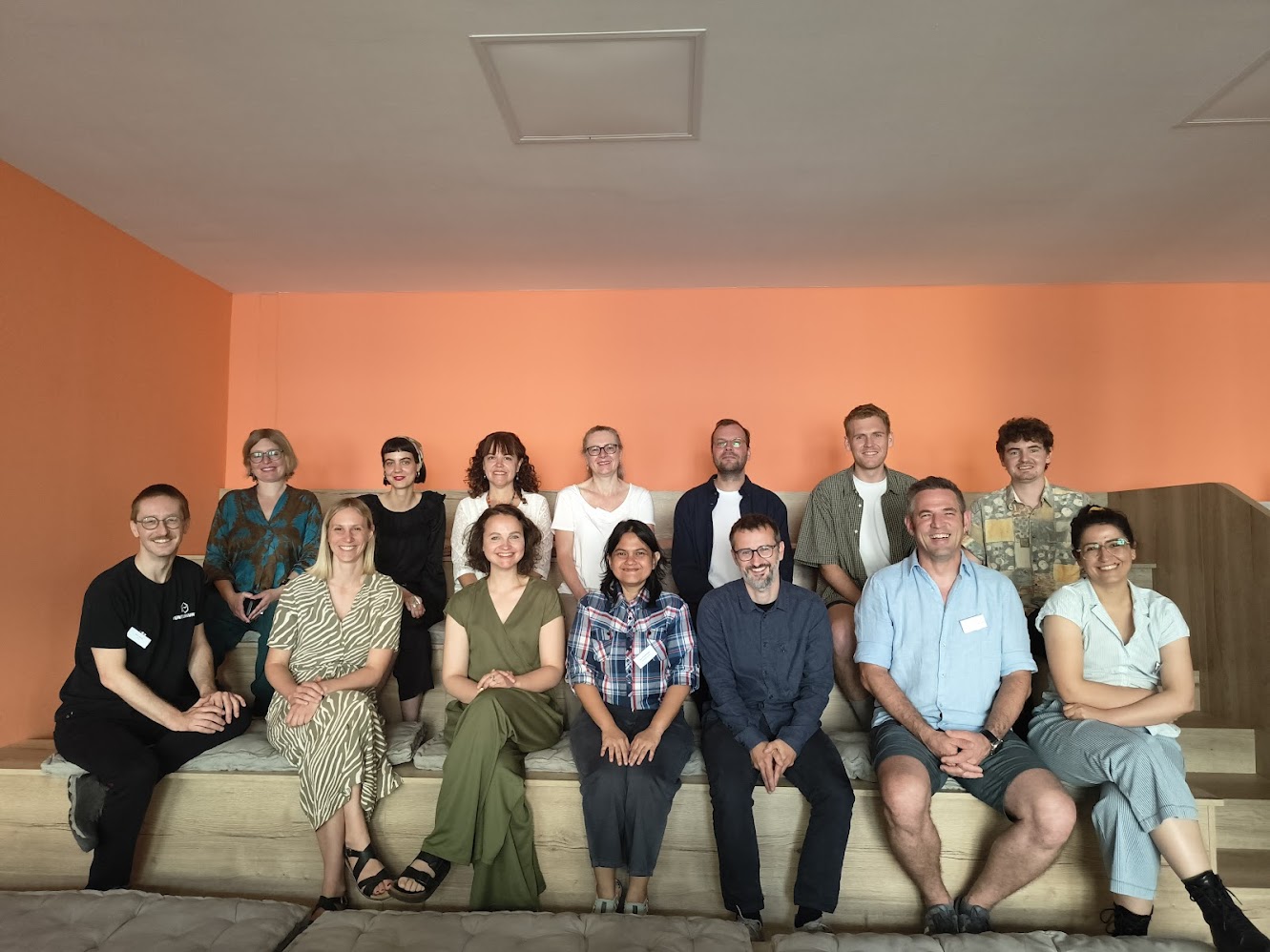
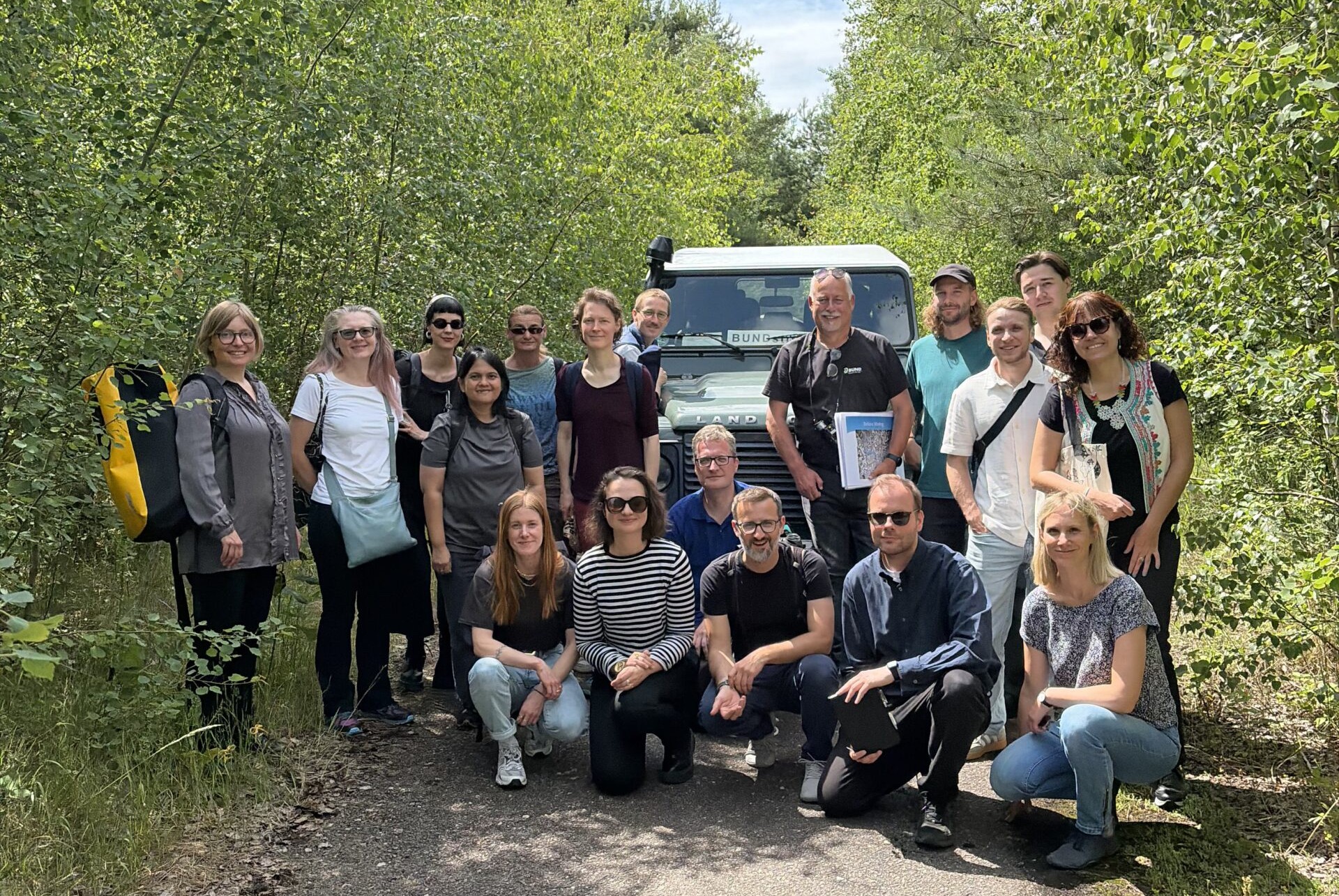
Which role does water play for sustainable transition of cities and regions? And how can sustainable water management help address the challenges of structural change in southern Saxony-Anhalt? These questions were at the heart of a field trip to Bitterfeld-Wolfen, organised by JTC Innovation Team A6 together with Revier Scout Christian Hennicke on 16th June 2026.
About 15 international researchers and members of the Just Transition Center (JTC) met with regional stakeholders to discuss these issues firsthand. The excursion demonstrated that few regions illustrate as vividly the tension between the legacy of an industrial past—particularly the environmental burdens of the chemical industry, including contaminated groundwater—and the opportunities offered by a sustainable, water-based transformation. Ecological restoration measures are not only creating new biodiversity hotspots for rare plant and animal species but are also opening up new opportunities for tourism and sustainable regional development. The excursion provided participants with the opportunity to connect academic discussions with practical insights from the field.
Against this backdrop, the excursion explored a range of dimensions of water-related transformation. At the Bitterfeld-Wolfen joint wastewater treatment plant, participants learned about the crucial role of modern water and wastewater infrastructure in environmental protection, resource conservation, and climate resilience at one of Central Germany’s most important industrial sites. Discussions with the municipal utility company focused on current challenges in sustainable water management, including resilient water supply systems, the impacts of climate change, and the remunicipalisation of water services. A visit to the long-distance water transfer station further highlighted the complexity of the region’s water supply infrastructure in the context of contaminated groundwater.
A complementary perspective on water as a driver of regional transformation was provided through a visit to the Goitzsche Wilderness and an exchange with representatives of BUND Saxony-Anhalt. The flooding of former open-cast lignite mines has not only created a unique lake landscape but has also established valuable biodiversity hotspots for numerous plant and animal species. During the field trip, participants were able to observe ospreys and several other rare species. Project leaders from BUND presented the transformation of the Goitzsche from a former mining area into a diverse natural landscape and discussed the challenges associated with environmental legacies, ecological restoration, and long-term conservation. Their presentations highlighted the close connections between the region’s history of lignite mining and contemporary issues of water protection, landscape development, and sustainable regional transformation in the face of climate change.
The insights gained during the excursion were further explored during the subsequent international writing workshop, Hydropolitical Geographies: Critical Perspectives on Water in a Changing Climate (16–18 June 2026, LegalTech Lab). The workshop examined hydropolitical geographies in the context of climate change from a range of disciplinary and international perspectives, addressing topics such as water governance, critical infrastructures, post-mining landscapes, the energy transition, environmental justice, and more-than-human relationships with water and bodies of water. Bringing together researchers from Uppsala University (Sweden), Universidad de Antioquia (Colombia), Universitas Indonesia (Indonesia), and the universities of Bonn, Frankfurt, and Salzburg, the workshop demonstrated the value of connecting international academic debates with concrete regional transformation processes. In doing so, it reaffirmed the JTC’s commitment to grounding global challenges of sustainable transformation in the region while jointly developing new perspectives for both research and practice.
Julia Ostertag and Dr. Larissa Fleischmann Team A6: Diversity in Socio-Ecological Transformations: Migration, Demographic Change, Environmental Conservation