
European Center of Just Transition Research and Impact-Driven Transfer
  • German
  • MLU
  • Research
    • A Just Transition Society
      • A1  Structural Change & Participation
      • A2  Chemistry in Transition
      • A3  Networking With Regions Undergoing Structural Change
      • A4  Just Transitions, Educational and Participation Opportunities for Children, Youth, and Adults
      • A5  Postindustrial Futures
      • A6  Diversity in Socioecological Transformations
      • A7  Transregional Just Transition Governance
    • B Sustainable Materials Technology
      • B1  CO₂-Sequestration and Soil Recultivation through Recycling of Mineral Residues
      • B2  Petrologoy of Raw Materials
      • B3  Green Molecules Conversion (GMC)
      • B4  Designer Proteins as Bio-based Binders
      • B5  New Photovoltaic Materials
      • B6  Batteries From Sustainable Materials
      • B7  Design of 3D-Printable Polymers Based on Regional Resources
    • C Labs
      • C1  Sustainability Standardisation
      • C2  LegalTech Lab
      • C3  Transformative Learning (TraiL)
    • D Transfer Incubator
  • In The Region
    • Transfer Incubator
    • Revier Scouts
    • Anhalt-Bitterfeld
    • Halle (Saale) and Saalekreis
    • Burgenlandkreis
    • Mansfeld-Südharz
  • Graduate school
    • Graduate School JUSTTRANSFER
    • Graduate program
  • About us
    • Just Transition Center
    • Projects
    • Publications
    • Events
    • News
  • in
Select Page

JTC presents Projects at the 6th Digitalization Forum of the MID

News
News
JTC presents Projects at the 6th Digitalization Forum of the MID
12. Dec 2025
Einführung in Legal Tech

Generating a Return from Digitalization? This Question Was at the Center of the 6th Digitalization Forum of the Ministry of Infrastructure and Digital Affairs (MID) in Magdeburg on December 11, 2025

The Just Transition Center (JTC) was invited to present two of its current research and development projects. Around 25 representatives from state administration, municipalities, and specialized ministries discussed ways in which digitalization can create real added value for the state of Saxony-Anhalt.

Digitalizing Administrative Processes

State Secretary Bernd Schlömer opened the event and provided an overview of the current status of key digitalization topics in the state. For 2026, he announced the establishment of an Open Source Round Table – a platform that could also incorporate the scientific expertise of the JTC in the future.

Among the guests were, in addition to CDOs Tobias Krüger (MID) and Dr. Kathrin Meyer-Pinger (Ministry of Education Saxony-Anhalt), representatives from the State Chancellery, the Association of Cities and Municipalities of Saxony-Anhalt (SGSA), and the Association of Districts.

Frank Bonse (MID) presented the recently concluded agreements with the district council and the SGSA. The aim of these collaborations is to strengthen districts in digitalizing their administrative processes and to build targeted expertise in these areas.

JTC Presents Projects: Open Source and Policy Generator

Dr. Cornelia Deimer, Revierscout, introduced the overall idea and philosophy of the JTC: The project examines 17 key future-oriented questions in the fields of society, materials science, and law, all related to transformation and structural change. The goal is to implement these questions in practice and develop solutions for the region. Digitalization of administration and the use of open-source solutions are central components.

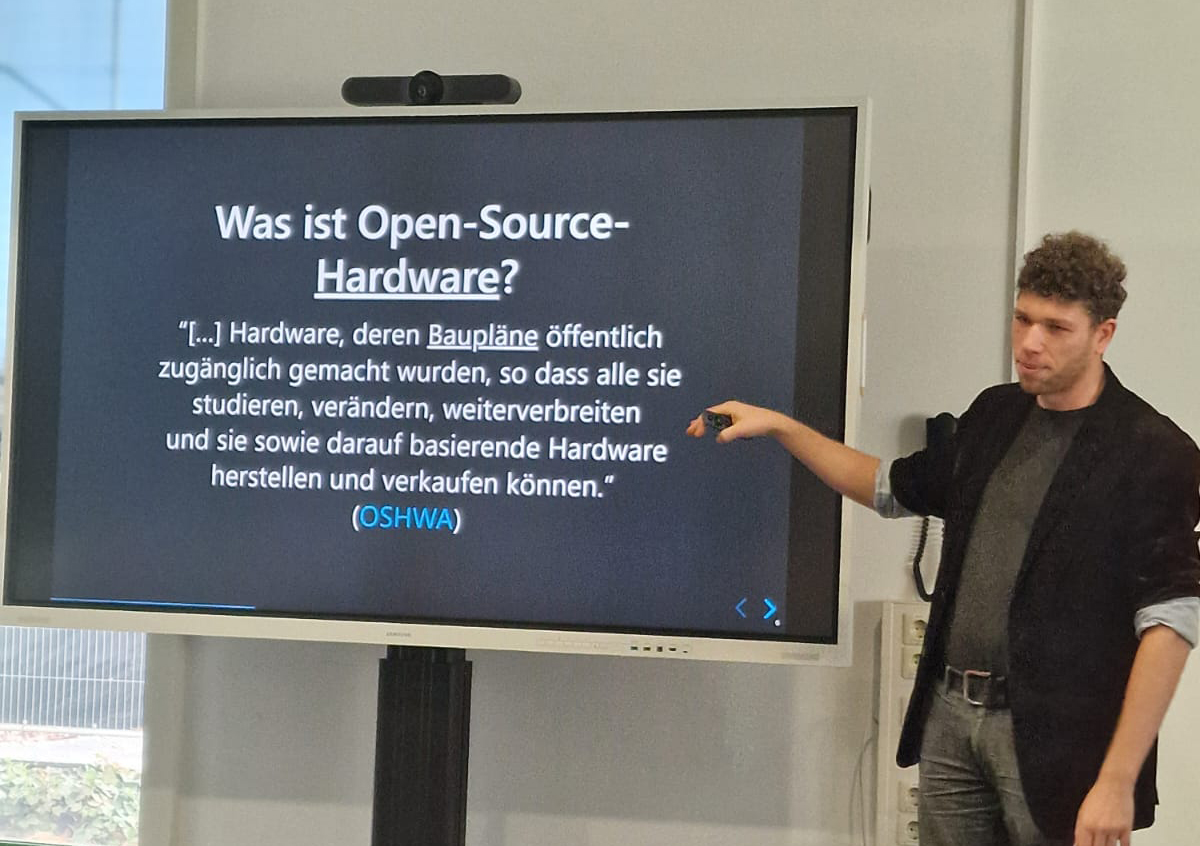
Building on this, Martin Häuer (Team C1) and his team presented their work on open source in software and hardware as well as on standardization. Over the past few years, the group has built expertise across Europe and has already achieved tangible results.

Georgia Könemann (Team C2) illustrated with a concrete practical example how a policy generator developed in the JTC’s LegalTech Lab can support administrations in drafting legal regulations in the future.

The Role of Artificial Intelligence (AI)

The event concluded with a lecture by Prof. Dr. Katja Nebe (Martin Luther University Halle-Wittenberg), who examined the role of artificial intelligence from the perspective of gender equality and non-discrimination – an important cross-cutting topic for the digitalization of public processes.

JTC draws a positive conclusion: The event provided valuable insights, new networking opportunities, and numerous points of contact for collaborations in 2026. A lively exchange with politics, administration, and regional actors was initiated and is expected to continue in the coming months.

Note: This article is an automatic translation of the original post. Please be aware that there may be linguistic inaccuracies or differences in interpretation. You can find the original post here.

← How AI and Legal Tech are transforming legal studies Luis Bartsch →
Zurück

Teams

Just Transition Society
  • A Just Transition Society
  • A1 Structural change & Participation
  • A2 Perspectives for research into petromodernity
  • A3 Networking with regions undergoing structural change
  • A4 Fair transitions for children, young people and adults
  • A5 Strategies for the development of the transition region
  • A6 Demographic change & the potential of immigration
  • A7 Transregional Just Transition Governance
Sustainable Materials Technology
  • B Sustainable Materials Technology
  • B1 CO₂-Sequestration & Soil Recultivation through Recycling of Mineral Residues
  • B2 Raw material petrology: Petrology of mineral resources
  • B3 Bifunctional catalysing materials for green molecules
  • B4 Designer proteins as bio-based binders
  • B5 Solar cell research based on unexplored photovoltaic materials
  • B6 Batteries from sustainable materials
  • B7 Design 3D-printable polymers based on regional resources
Labs
  • C Labs
  • C1 Sustainability standardisation
  • C2 LegalTech Lab
  • C3 EdTech in rural areas
D Transferincubator

Revierscouts

Anhalt-Bitterfeld
Burgenlandkreis
Halle (Saale) and Saalekreis
Mansfeld-Südharz

Graduate school

Graduate school Info
Graduate program

About us

News
Events
Publications
Contact
Projects

Follow us

LinkedIn icon
Förderlogos: Gefördert vom Land Sachsen-Anhalt und Finanziert von der Europäischen Union
  • Contact
  • Imprint
  • Privacy policy
Cookies

Auf diesen Seiten gibt es externe Inhalte von Drittanbietern, die Geräteinformationen speichern. Bei abgelehnten Cookies können bestimmte Merkmale und Funktionen beeinträchtigt werden.

Funktional Always active
Die technische Speicherung oder der Zugang ist unbedingt erforderlich für den rechtmäßigen Zweck, die Nutzung eines bestimmten Dienstes zu ermöglichen, der vom Teilnehmer oder Nutzer ausdrücklich gewünscht wird, oder für den alleinigen Zweck, die Übertragung einer Nachricht über ein elektronisches Kommunikationsnetz durchzuführen.
Präferenzen
Die technische Speicherung oder der Zugriff ist für den rechtmäßigen Zweck der Speicherung von Präferenzen erforderlich, die nicht vom Abonnenten oder Benutzer angefordert wurden.
Statistiken
Die technische Speicherung oder der Zugriff, der ausschließlich zu statistischen Zwecken erfolgt. Die technische Speicherung oder der Zugriff, der ausschließlich zu anonymen statistischen Zwecken verwendet wird. Ohne eine Vorladung, die freiwillige Zustimmung deines Internetdienstanbieters oder zusätzliche Aufzeichnungen von Dritten können die zu diesem Zweck gespeicherten oder abgerufenen Informationen allein in der Regel nicht dazu verwendet werden, dich zu identifizieren.
Drittanbieter
Die technische Speicherung oder der Zugriff ist erforderlich, um die Dienste von Drittanbietern wie YouTube, OSM oder GoogleMaps zu nutzen, die ggf. Informationen zu Marketingzwecken speichern.
  • Manage options
  • Manage services
  • Manage {vendor_count} vendors
  • Read more about these purposes
Einstellungen
  • {title}
  • {title}
  • {title}