Pedagogical Places and (De-)Pedagogised Spaces. Just Transitions for Children and Young People in the Context of Regional Structural Change
Just Transitions, Educational and Participation Opportunities for Children, Youth, and Adults
How are social and pedagogical spaces produced through regional structural change, and what significance do they carry for young people’s participation and their visions of the future?
Photograph above: Petra Mattheis
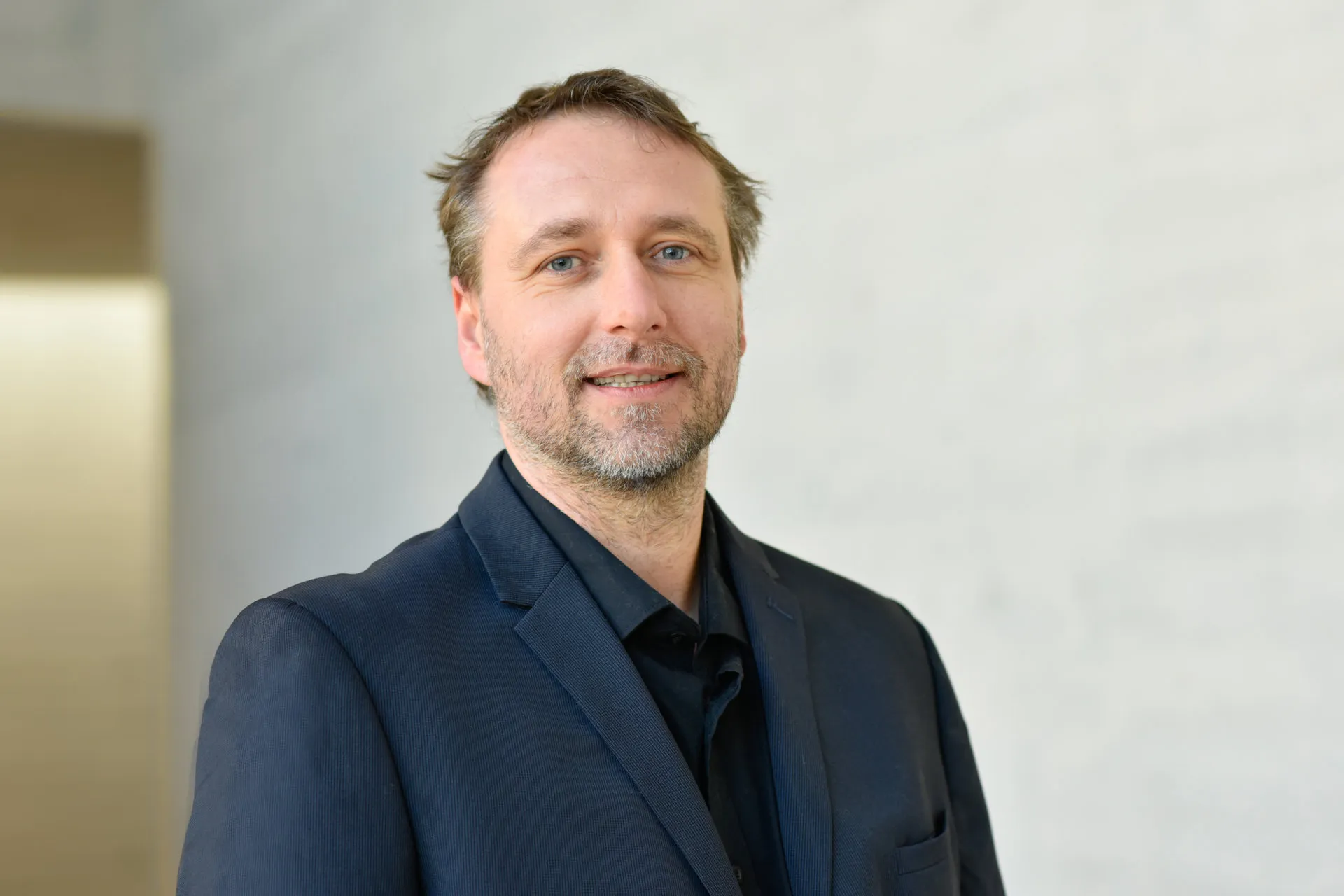
Dr. Martin Kriemann’s Scientific Qualification Project
The structural transformation of the Central German lignite mining region cannot be understood solely as a technological, economic, and political process of transformation; it simultaneously constitutes a profound social and pedagogical challenge. In peripheralised regions of East Germany, the long-term consequences of the systemic rupture of 1989/90 overlap with the current dynamics of the coal phase-out and decarbonisation. These processes shape, in particularly formative ways, the lifeworlds of children and young people, as well as the conditions for social participation, recognition, and the capacity to envision futures.
The cumulative habilitation project examines, from a perspective rooted in educational science and social pedagogy, how social(-pedagogical) spaces are produced, appropriated, and interpreted in the context of regional structural change. Central to the project is the question of how children and young people process their experiences and expectations within long-term processes of social, economic, and institutional transformation, and what significance pedagogical, community, and public spaces acquire for their orientations towards participation and future-making. At the same time, the project analyses how social-pedagogical practice in structural change becomes de-bounded, repositions itself, and is confronted with normative frameworks drawn from theories of democracy and justice.
Empirically, the project draws on qualitative research approaches, including group discussions with young people, semi-structured interviews with professionals, ethnographic fieldwork in youth and social-pedagogical contexts, as well as spatially oriented methods such as place walks and visual social space analyses. Data analysis proceeds interpretively and reconstructively, drawing on social-spatial theory, the sociology of knowledge, post-socialist perspectives, and dominance-critical approaches. Analytically, the project asks how social spaces emerge as configurations of material, symbolic, and relational orders, and how they enable, constrain, or reconfigure participation.
A central feature of the habilitation project is the systematic interlinking of research and knowledge transfer. The empirically generated findings are continuously fed back into dialogical formats with regional practitioners from the fields of youth work, education, social work, and structural development. Workshops, public presentations, specialist events, and cooperative development and advisory formats serve not merely to communicate scientific findings, but to facilitate shared reflection on pedagogical practice and the co-production of application-oriented knowledge. Transfer is understood as a reciprocal process in which regionally embedded experiential knowledge forms an integral part of scientific knowledge production.
The individual publications of the cumulative project reconstruct childhood(s) and youth in structural change as a social position marked by ambivalences — situated between marginalisation, promises of participation, and autonomous forms of spatial appropriation. Social(-pedagogical) space is understood not as a given framework for action, but as a contested, dynamic product of societal negotiation.
The project contributes to educational-scientific research on structural change, to social-pedagogical spatial theory, and to the analysis of just transitions in the face of diverse diagnoses of contemporary crises. It simultaneously opens up perspectives for the reflexive further development of educational, participatory, and support structures for children and young people in peripheralised regions of East Germany.
Transfer Profile
Dialogic Knowledge Transfer on Social(-Pedagogical) Spaces in Structural Change
The transfer profile is characterised by a dialogic, relational, and regionally embedded understanding of knowledge transfer. Transfer is not conceived as the downstream application of scientific findings, but as an integral component of the research process itself — as a reciprocal movement between scientific analysis, pedagogical practice, associational spaces of experience, and political decision-making structures.
The starting point for transfer activities is empirical research into the lifeworlds of children and young people, as well as into social-pedagogical, youth-pedagogical, and educational spaces in the context of regional structural change. The findings generated are continuously brought into exchange formats with regional practitioners, where they are collectively reflected upon, contextualised, and further developed. The aim is to make scientific perspectives accessible and applicable to practice, while simultaneously feeding regional experiential and practical knowledge systematically back into the research process.
Central transfer formats include workshops, public presentations, specialist events, network structures, and cooperative development and advisory formats involving practitioners from youth and social work, educational institutions, municipal administration, civil society organisations, and structural development bodies. These formats open up spaces for collective knowledge production, in which questions of social participation, recognition, democracy, and justice in structural change are worked through collaboratively.
A particular emphasis is placed on longer-term collaborations with regional and supra-regional actors engaged in structural change. Within these contexts, empirical findings are translated into application-oriented bodies of knowledge — for instance, regarding the design of socio-spatial provision or the strengthening of youth participation. Beyond this, the collaborations aim at the further development of municipal support, educational, and participatory structures. Transfer is here deliberately not reduced to short-term problem-solving, but understood as a reflexive developmental process that renders visible and critically interrogates the structural conditions of pedagogical practice.
Furthermore, the transfer profile explicitly addresses political and administrative levels. Through policy papers, expert lectures, panel discussions, practice guides, and scientific advisory formats, social-pedagogical perspectives are brought to bear on debates in structural and educational policy. The aim is to give evidence-based substance to the guiding principle of just transitions in structural change, and to inscribe social-pedagogical knowledge as a relevant form of knowledge within transformation processes.
Overall, the transfer profile is shaped by a research-led, power-critical, and participation-sensitive orientation. It understands transfer as a constituent part of scientific responsibility and contributes to strengthening democratic, socially just, and regionally responsive processes of shaping change in times of profound societal transformation.