European Center of Just Transition Research and Impact-Driven Transfer
  • German
  • MLU
  • Research
    • A Just Transition Society
      • A1  Structural Change & Participation
      • A2  Chemistry in Transition
      • A3  Phytomining & Bioextraction
      • A4  Just Transitions, Educational and Participation Opportunities for Children, Youth, and Adults
      • A5  Postindustrial Futures
      • A6  Diversity in Socioecological Transformations
      • A7  Transregional Just Transition Governance
    • B Sustainable Materials Technology
      • B1  CO₂-Sequestration and Soil Recultivation through Recycling of Mineral Residues
      • B2  Petrologoy of Raw Materials
      • B3  Green Molecules Conversion (GMC)
      • B4  Designer Proteins as Bio-based Binders
      • B5  New Photovoltaic Materials
      • B6  Batteries From Sustainable Materials
      • B7  Design of 3D-Printable Polymers Based on Regional Resources
    • C Labs
      • C1  Sustainability Standardisation
      • C2  LegalTech Lab
      • C3  Transformative Learning (TraiL)
    • D Transfer Incubator
  • In The Region
    • Transfer Incubator
    • Revier Scouts
    • Anhalt-Bitterfeld
    • Halle (Saale) and Saalekreis
    • Burgenlandkreis
    • Mansfeld-Südharz
  • Graduate school
    • Graduate School JUSTTRANSFER
    • Graduate program
  • About us
    • Just Transition Center
    • Projects
    • Publications
    • Events
    • News
  • in
Select Page

Lively Discussion With Panellists and Audience Following Film Screening

News
News
Lively Discussion With Panellists and Audience Following Film Screening
1. Jul 2026
Ausschnitt aus einem Video: Händen halten zwei verschieden große Muscheln

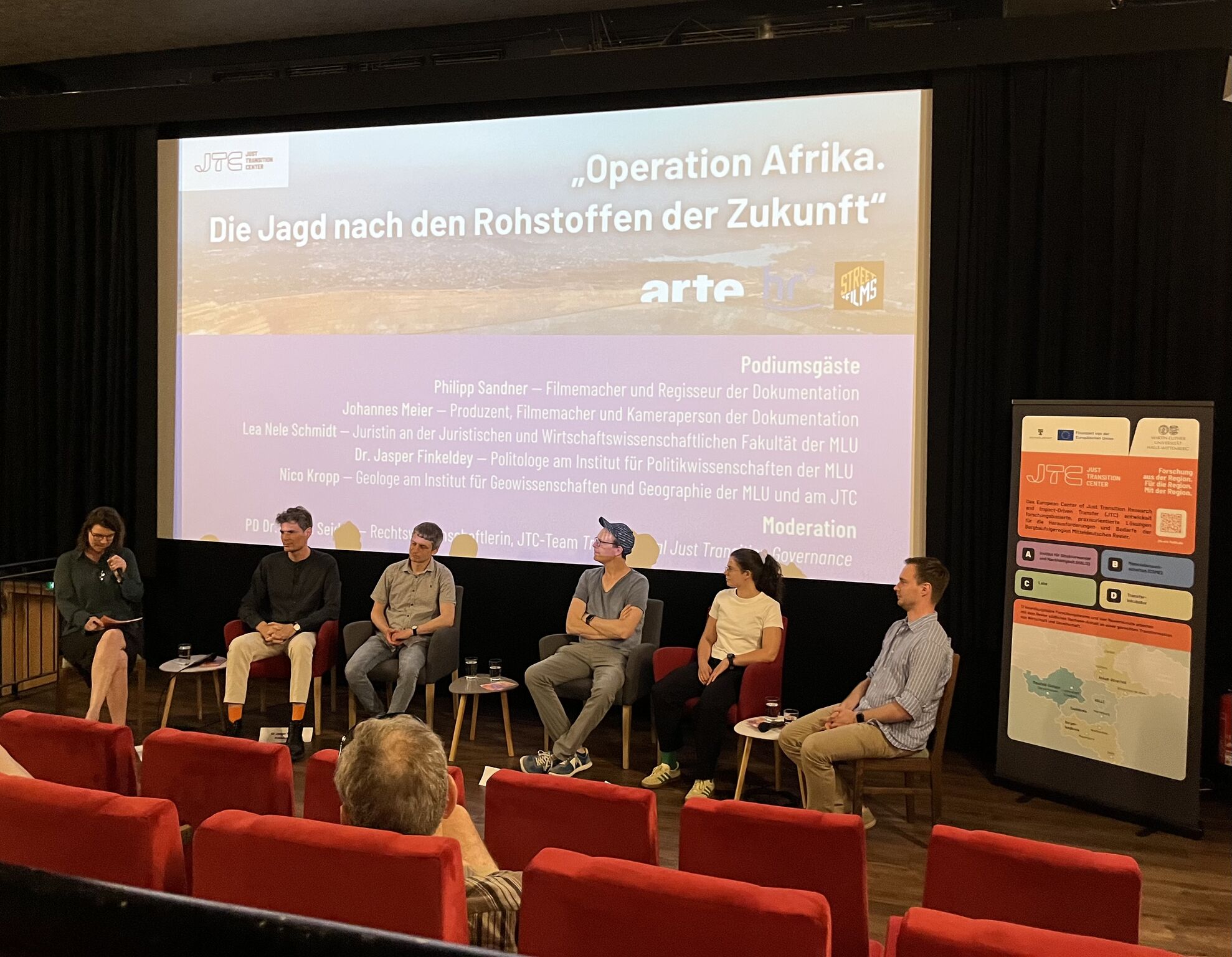
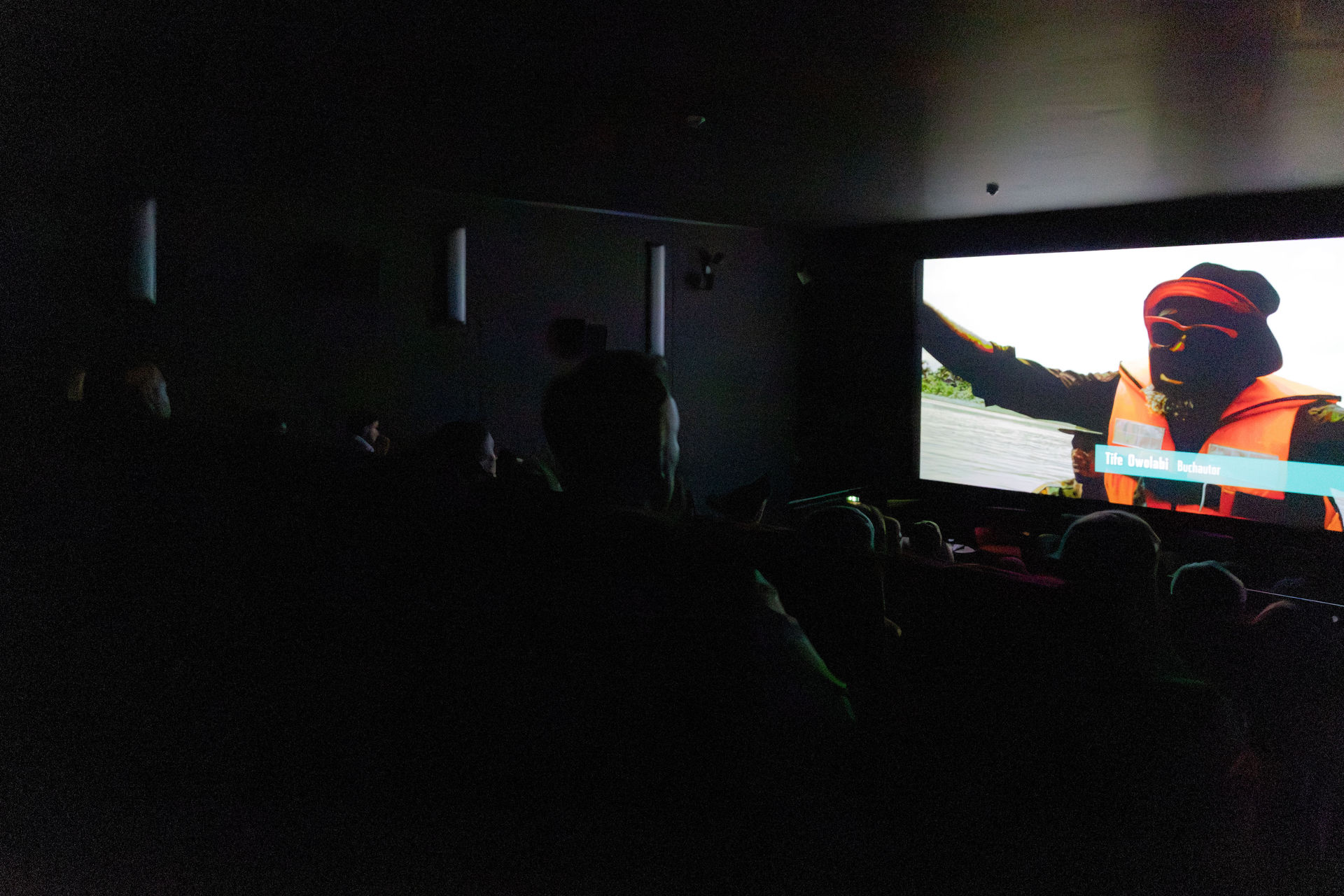
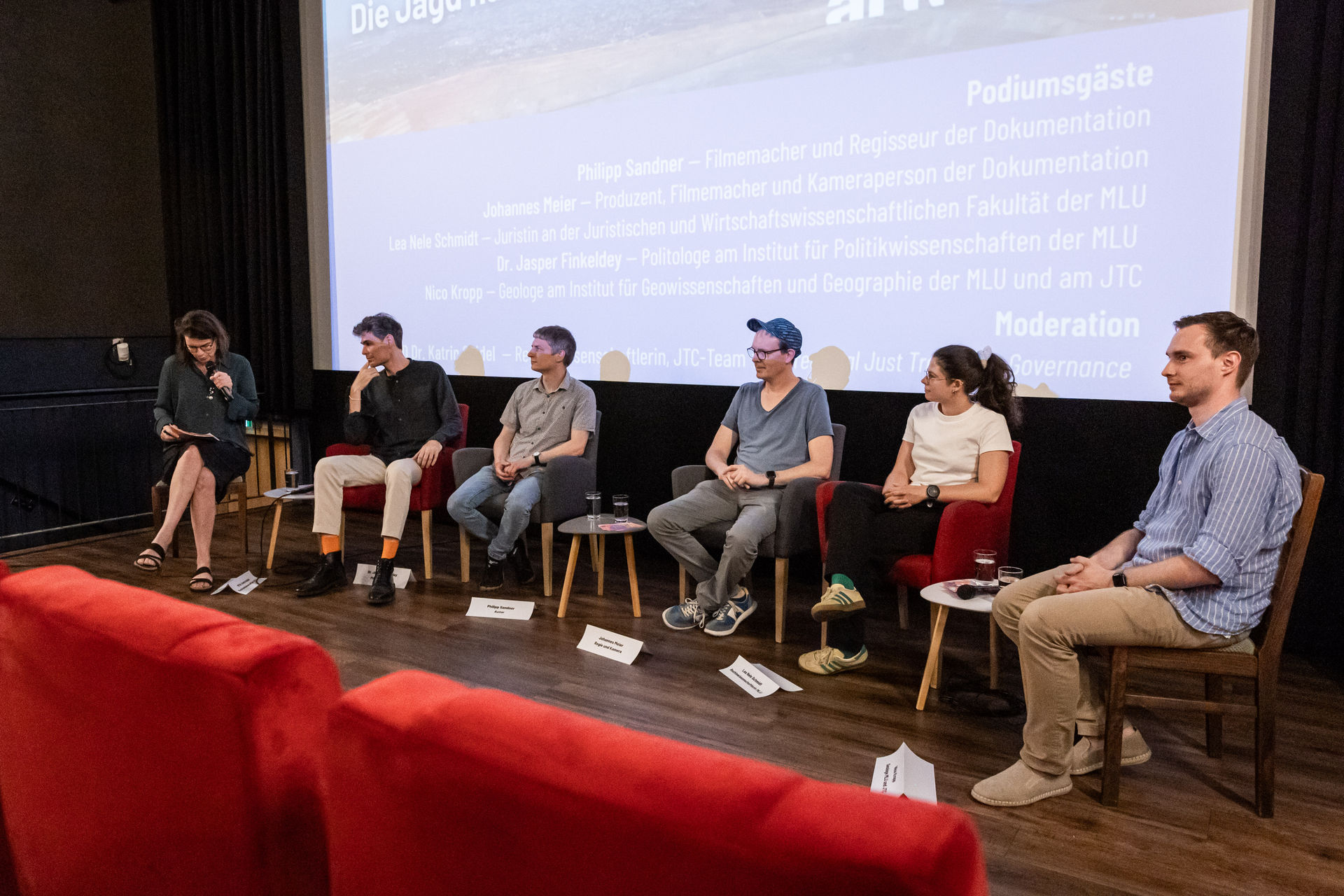
On 25th June, JTC Team A7 (Transregionale Just Transition Governance) organised a film screening with discussion at Puschkino about the documentary „Operation Afrika. Die Jagd nach den Rohstoffen der Zukunft“ (ARTE/HR, STREETSFILM, 2024, “Operation Africa. Hunt for the Raw Materials of the Future“).

The film follows the global search for critical raw materials in Africa and examines the geopolitical and economic dynamics, as well as the enormous social and environmental consequences of raw material extraction, through three case studies: cobalt mining in small-scale mines in the Democratic Republic of the Congo, a green hydrogen project in Namibia, and the oil-plagued Niger Delta in Nigeria, which continues to supply Europe with natural gas as part of the energy transition.

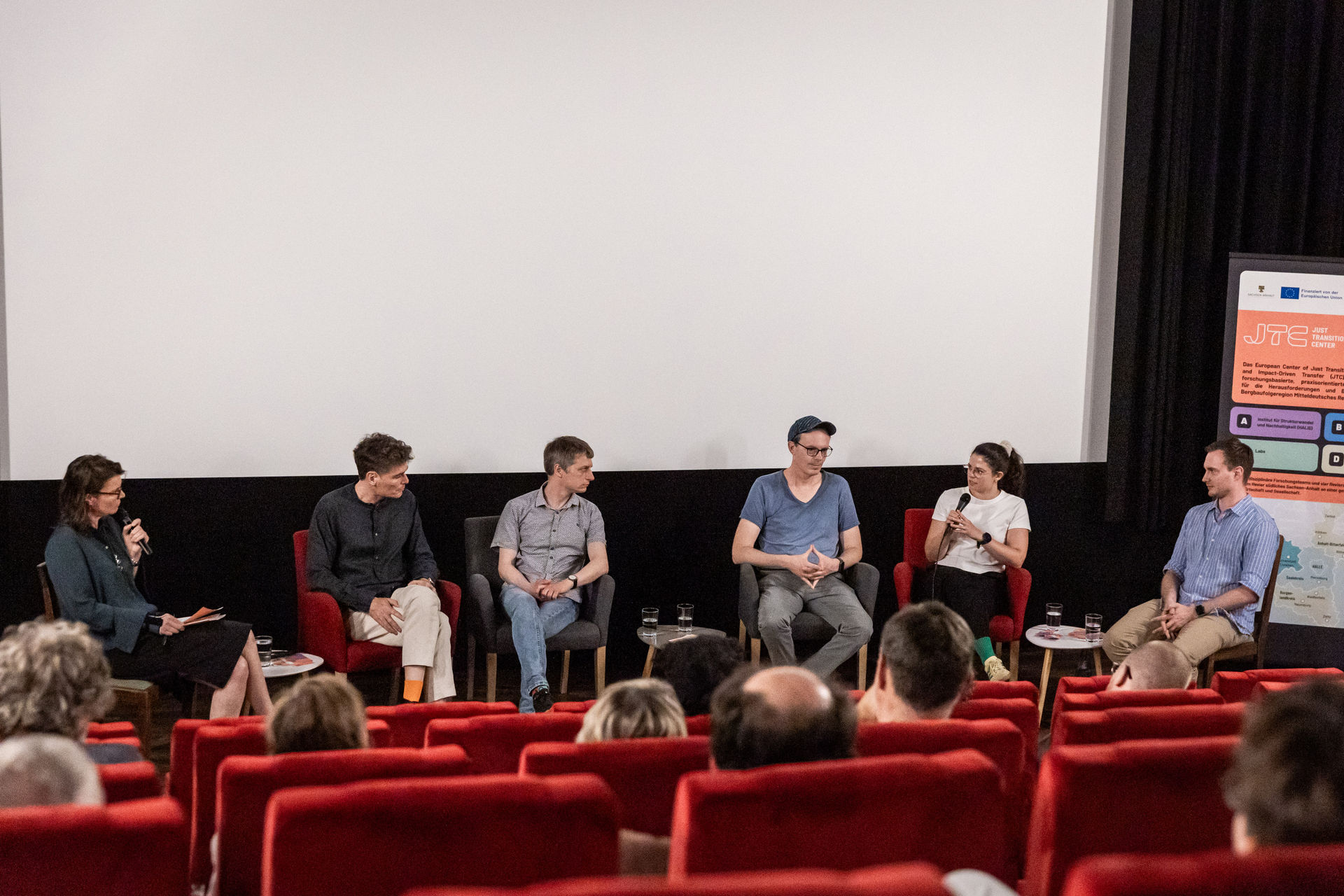
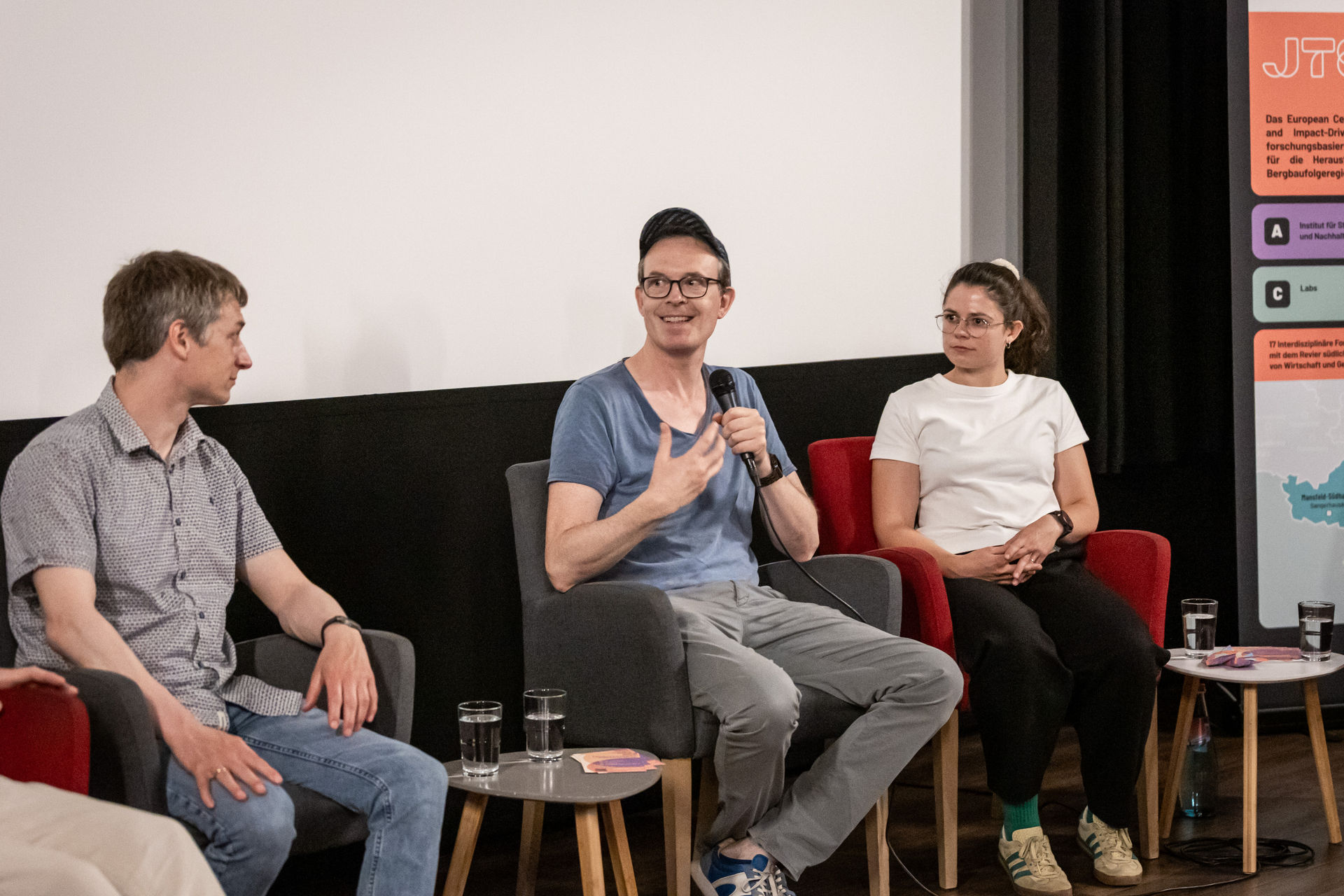
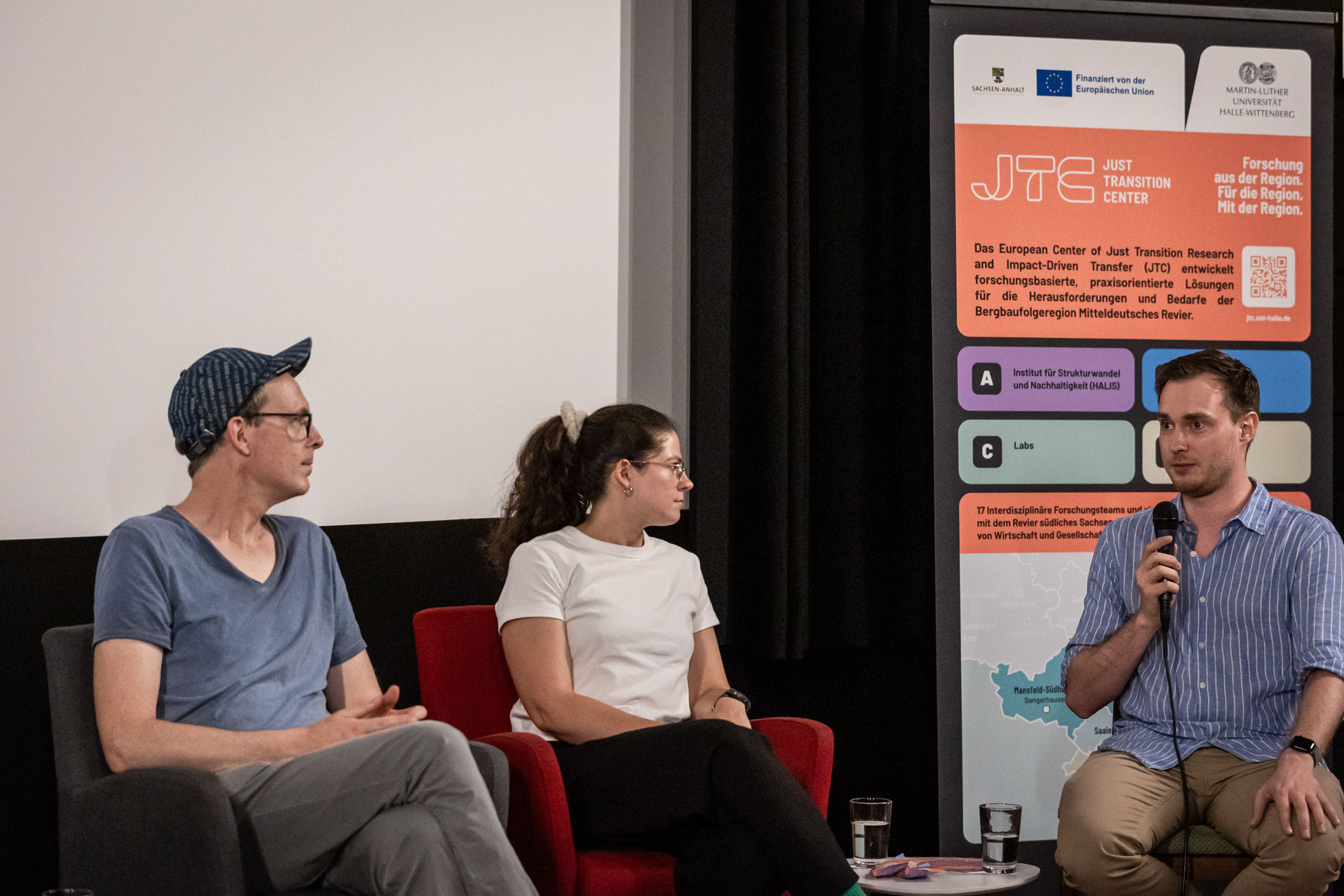
Following the screening, the filmmakers Philipp Sandner and Johannes Meier discussed the implications of the global energy transition with political scientist Dr Jasper Finkeldey, lawyer Lea Nele Schmidt and geologist Nico Kropp. The discussion was moderated by PD Dr Katrin Seidel, team leader of the JTC Innovation Team A7.

The panel discussion focused on the links between the extraction of raw materials necessary for the energy transition, the lack of regulation surrounding this, and the associated physical and ethical costs for people and nature. The combination of the film, the panel discussion and the subsequent open discussion created a lively atmosphere that encouraged many visitors to engage with the topics and join in the conversation.

The filmmakers spoke about the challenges they faced during filming and the moments that had broadened their personal horizons. They were also able to provide an update on the projects featured in the 2024 film. The scientists discussed the challenges arising from the demand for raw materials. It became clear that, for example, recycling alone will not be able to meet demand, as many rare earths are locked up in existing components for long periods (e.g. 20–40 years in wind turbines). Instead, extraction should become more efficient, not only through new mining – including in Europe – but also by increasing the yield from existing mining waste products.
Lea Schmidt outlined the requirements under international law and national legislation, but also emphasised the importance of voluntary commitments by companies and the fact that these can be effective provided there are regulatory and supervisory institutions in place.

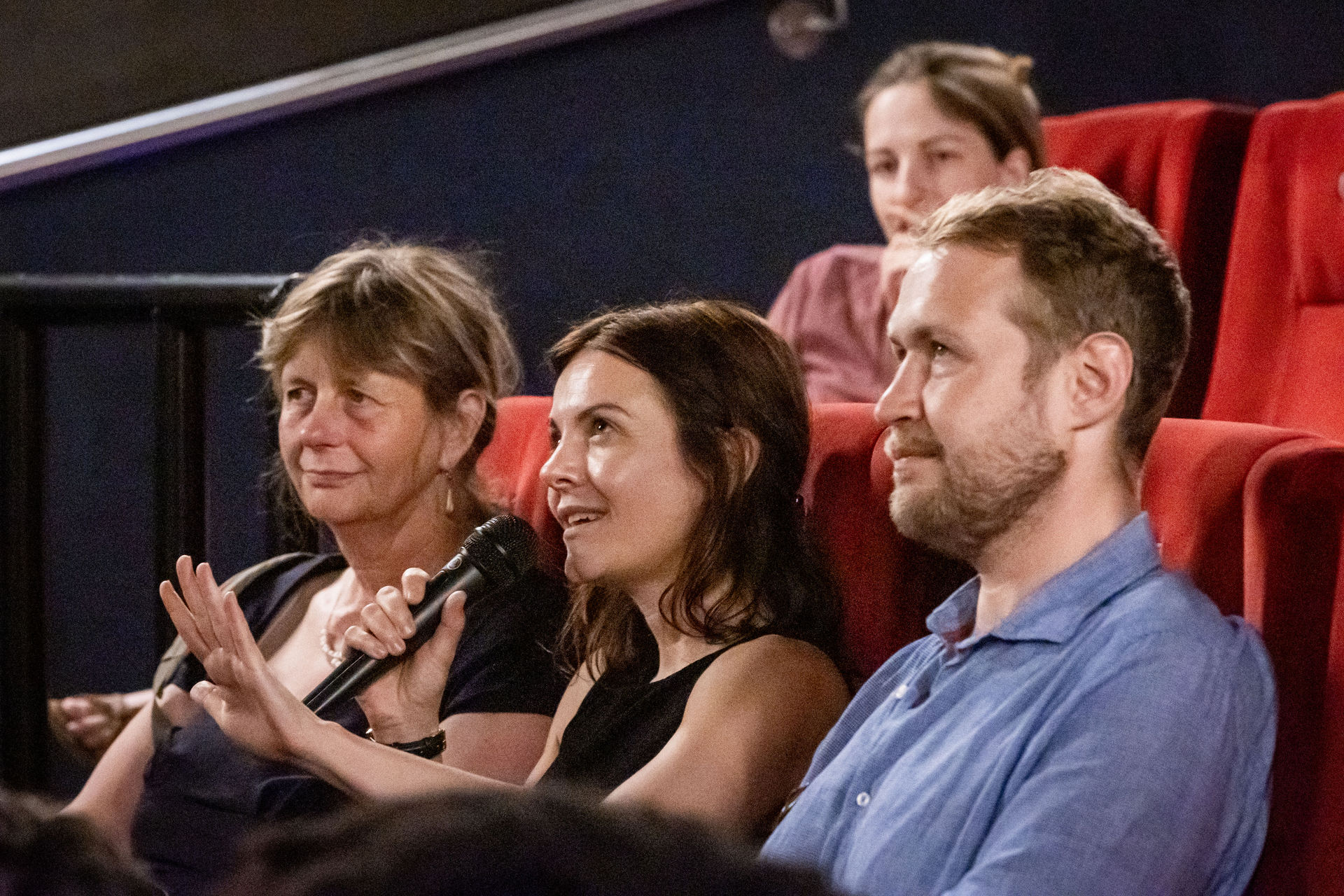
There were numerous questions and comments from the audience, for example regarding individual projects, how the film was received in the countries and communities featured, and a point raised about rising demand for raw materials and energy – partly driven by an aspect not previously highlighted, namely increasing digitalisation and artificial intelligence.

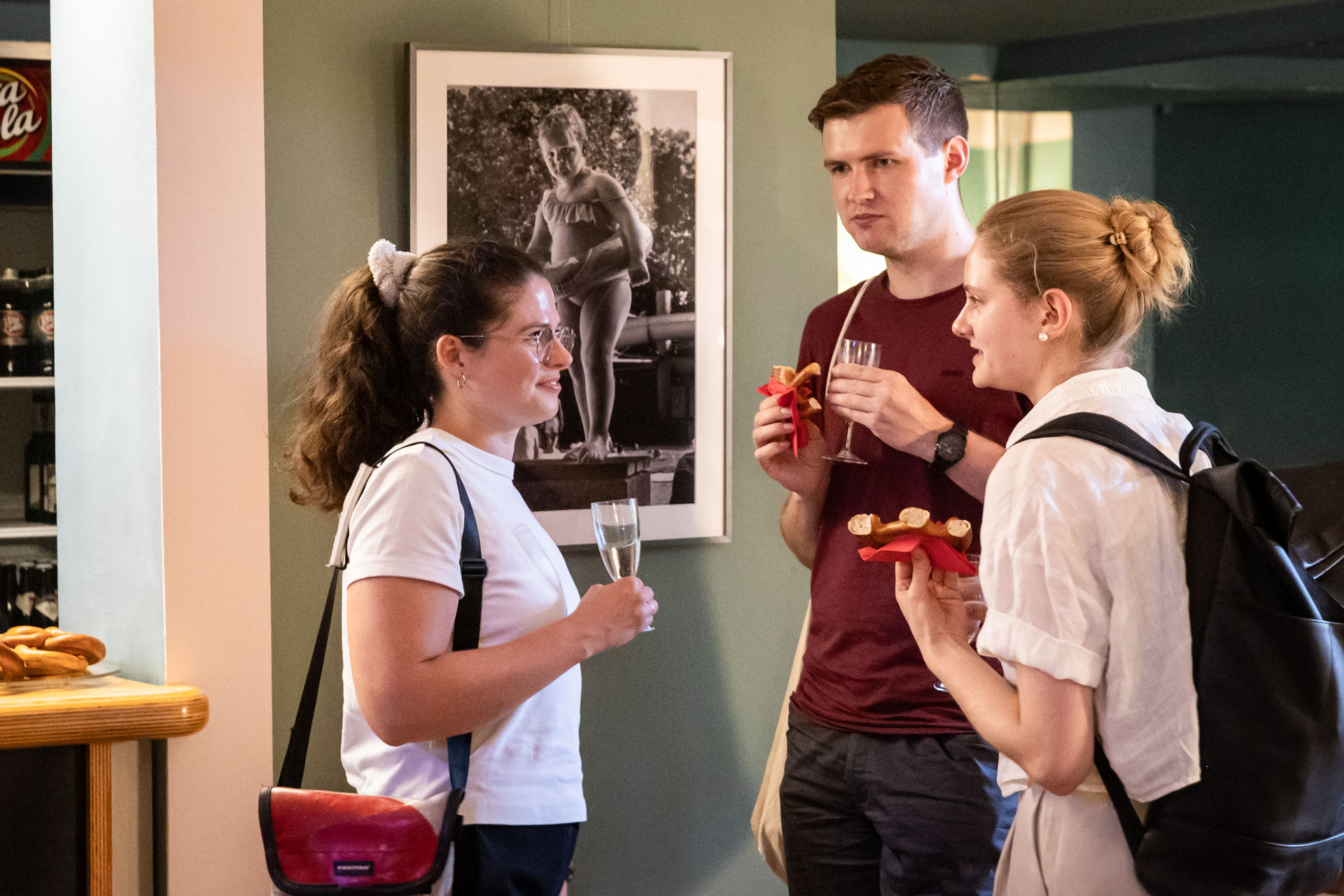
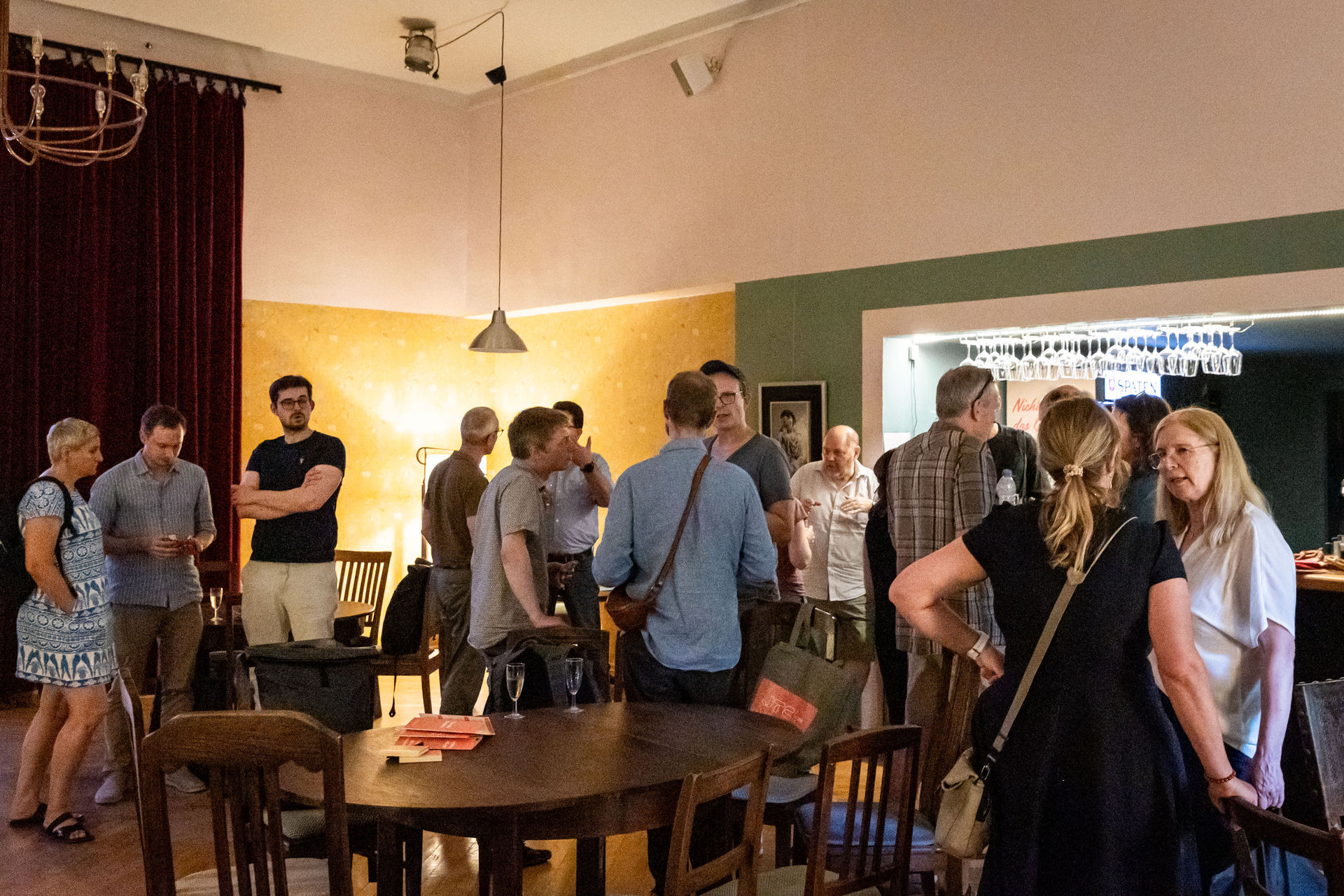
The evening concluded with an informal get-together over drinks and snacks. The JTC Team A7 would like to extend their warmest thanks to all those involved.

The event took place as part of the international workshop on ‘Transregional Ressourc Governance and Value Chains’ and formed the public part of the academic exchange.
← Two JTC-teams advance to the finals of the Lab to Market Challenge in Leverkusen Workshop: Transregional Ressource Governance and Transnational Value Chains →
Zurück

Teams

Just Transition Society
  • A Just Transition Society
  • A1 Structural change & Participation
  • A2 Perspectives for research into petromodernity
  • A3 Networking with regions undergoing structural change
  • A4 Fair transitions for children, young people and adults
  • A5 Strategies for the development of the transition region
  • A6 Demographic change & the potential of immigration
  • A7 Transregional Just Transition Governance
Sustainable Materials Technology
  • B Sustainable Materials Technology
  • B1 CO₂-Sequestration & Soil Recultivation through Recycling of Mineral Residues
  • B2 Raw material petrology: Petrology of mineral resources
  • B3 Bifunctional catalysing materials for green molecules
  • B4 Designer proteins as bio-based binders
  • B5 Solar cell research based on unexplored photovoltaic materials
  • B6 Batteries from sustainable materials
  • B7 Design 3D-printable polymers based on regional resources
Labs
  • C Labs
  • C1 Sustainability standardisation
  • C2 LegalTech Lab
  • C3 EdTech in rural areas
D Transferincubator

Revierscouts

Anhalt-Bitterfeld
Burgenlandkreis
Halle (Saale) and Saalekreis
Mansfeld-Südharz

Graduate school

Graduate school Info
Graduate program

About us

News
Events
Publications
Contact
Projects

Follow us

LinkedIn icon
Förderlogos: Gefördert vom Land Sachsen-Anhalt und Finanziert von der Europäischen Union
  • Contact
  • Imprint
  • Privacy policy
Cookies

Auf diesen Seiten gibt es externe Inhalte von Drittanbietern, die Geräteinformationen speichern. Bei abgelehnten Cookies können bestimmte Merkmale und Funktionen beeinträchtigt werden.

Funktional Always active
Die technische Speicherung oder der Zugang ist unbedingt erforderlich für den rechtmäßigen Zweck, die Nutzung eines bestimmten Dienstes zu ermöglichen, der vom Teilnehmer oder Nutzer ausdrücklich gewünscht wird, oder für den alleinigen Zweck, die Übertragung einer Nachricht über ein elektronisches Kommunikationsnetz durchzuführen.
Präferenzen
Die technische Speicherung oder der Zugriff ist für den rechtmäßigen Zweck der Speicherung von Präferenzen erforderlich, die nicht vom Abonnenten oder Benutzer angefordert wurden.
Statistiken
Die technische Speicherung oder der Zugriff, der ausschließlich zu statistischen Zwecken erfolgt. Die technische Speicherung oder der Zugriff, der ausschließlich zu anonymen statistischen Zwecken verwendet wird. Ohne eine Vorladung, die freiwillige Zustimmung deines Internetdienstanbieters oder zusätzliche Aufzeichnungen von Dritten können die zu diesem Zweck gespeicherten oder abgerufenen Informationen allein in der Regel nicht dazu verwendet werden, dich zu identifizieren.
Drittanbieter
Die technische Speicherung oder der Zugriff ist erforderlich, um die Dienste von Drittanbietern wie YouTube, OSM oder GoogleMaps zu nutzen, die ggf. Informationen zu Marketingzwecken speichern.
  • Manage options
  • Manage services
  • Manage {vendor_count} vendors
  • Read more about these purposes
Einstellungen
  • {title}
  • {title}
  • {title}